
Why This Calvin and Hobbes Comic Still Defines Great Parenting —Almost 40 Years Now
Discover how a classic Calvin and Hobbes strip beautifully captures the essence of good parenting, childhood wonder, and the timeless bond between father and son — lessons that remain powerful after 40 years.
You don't just read Calvin and Hobbes for 35 years( Now I am almost 40). You live with them. The collected volumes on your shelf become a kind of family photo album, not of your own life, but of your inner life. The bindings crack, the newsprint-yellowed pages soften, and the lessons within shift from simple observations to profound, quiet commandments.
There’s one strip in particular that has been my companion, my conscience, since I first encountered it as a kid. I didn’t understand it then, not really. I was Calvin, bundled up and bursting with the potential energy of a snowy day. Now, decades later, with my own desk and my own deadlines, I’ve become the father.
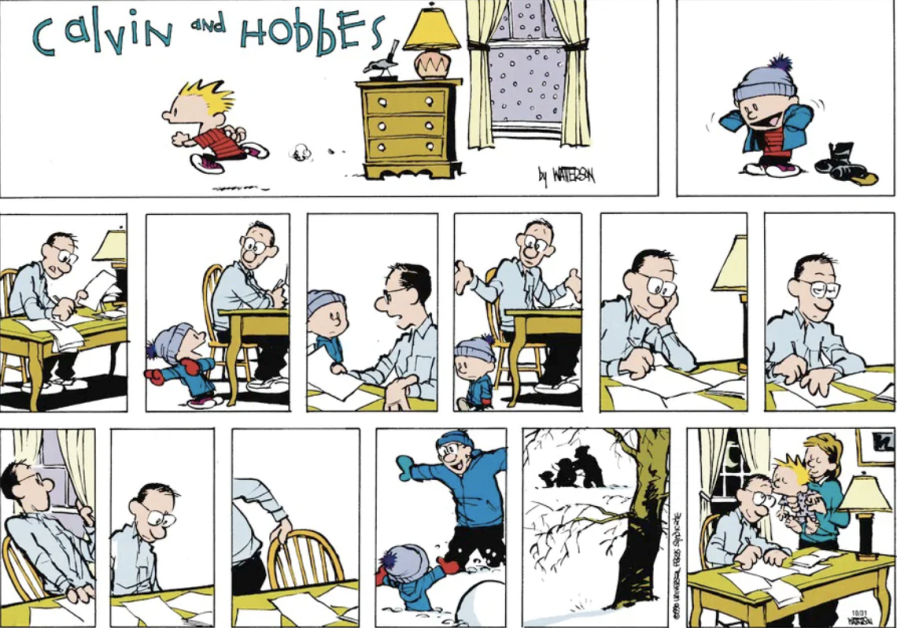
You know the one. Calvin, swaddled in a scarf and hat, gives his dad that look—a silent, hopeful plea that cuts through the rustle of paperwork. The father hesitates. He’s at his desk, the universal symbol of Grown-Up Responsibilities. For a single, heart-stopping panel, the weight of adult obligation wins.
And then, Bill Watterson performs his magic. The father gets up.
We see them outside—a chaotic, joyous blur of snowballs and a grotesque snowman. The transformation is complete. Later, the final panel shows the father back at his desk, but he’s not the same man. He’s smiling to himself, the cold air of the adventure still clinging to him, the glow of the memory effortlessly pushing aside the glow of the desk lamp.
The Lesson That Deepens With Time
When I was young, this was a nice story about a dad who was cool. In my 20s, it was a romantic ideal. But as a parent? It became scripture.
Watterson wasn’t giving us a “parenting lesson.” He was showing us a truth about being human. That stack of papers on the desk will never, ever be finished. But the snow melts by afternoon. Calvin’s unbridled, desperate joy for a snowy day is the most urgent and important thing in the world, and his father, in that moment of grace, recognizes it.
He chooses the ephemeral over the eternal. He chooses connection over completion.
This is the philosophy that has seeped into my bones over the years. It’s not about “work-life balance,” a sterile, modern term. It’s about recognizing that life is what happens when you’re planning to work. It’s the ultimate argument for presence. The snowman will inevitably slump into a puddle, but the memory of building it—of your dad dropping everything to be a fool with you in the snow—that becomes part of your foundation.
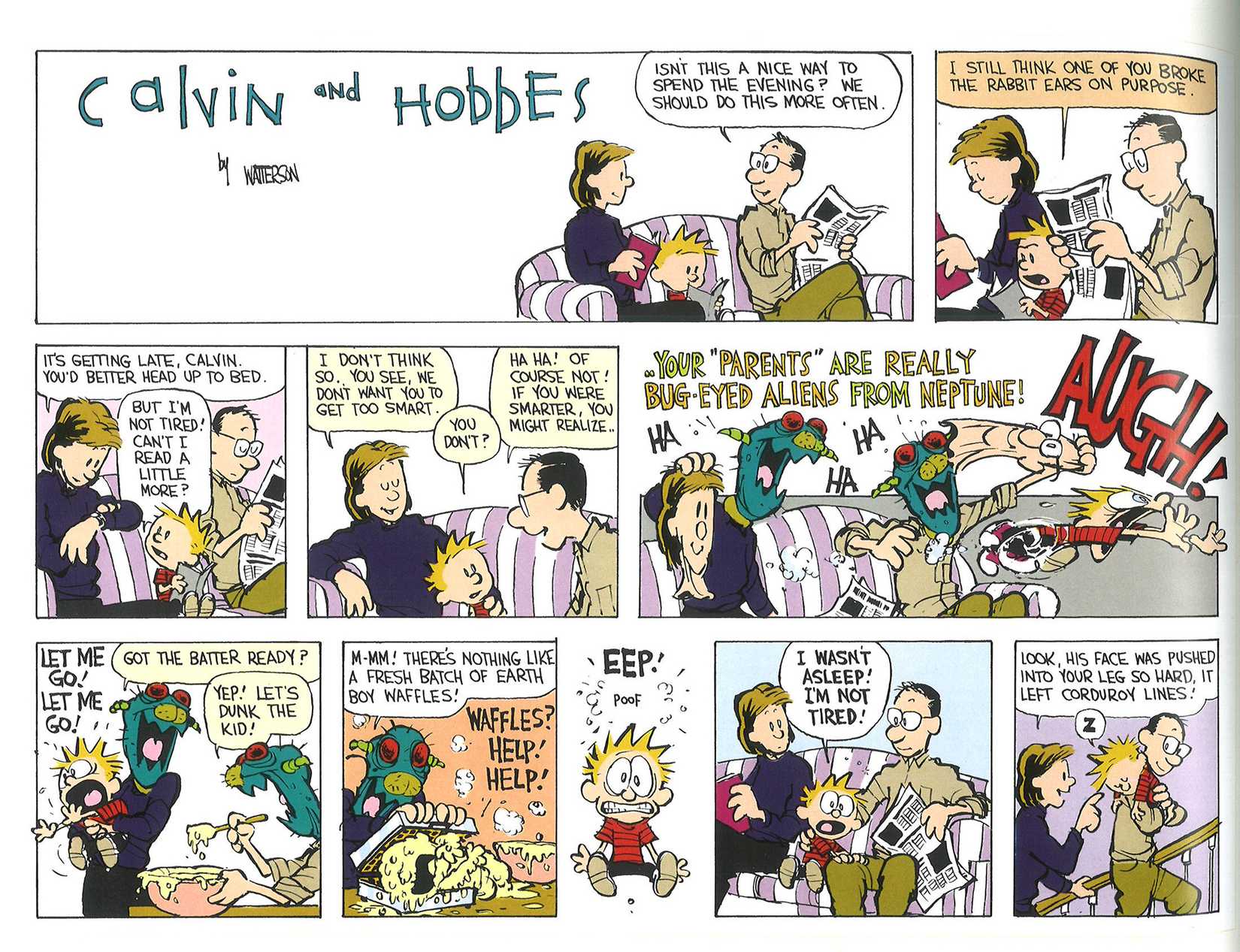
What It Teaches About Good Parenting
Be Present, Not Perfect:
Children don’t need flawless parents — they need engaged ones. Calvin’s father shows that love is an action, not a plan.Small Moments Matter:
It’s easy to underestimate how much joy a few minutes of play can bring. In those moments, trust, empathy, and joy are built.Balance Work and Family:
True success is not about how many papers you sign, but about how many memories you make.Model Emotional Intelligence:
Calvin’s father doesn’t scold or dismiss him; he reads the situation with compassion. That’s the foundation of emotional intelligence — responding, not reacting.
Why This Comic Still Resonates Today
In a digital age filled with screens, notifications, and constant distraction, this Calvin and Hobbes strip feels almost prophetic. It reminds us that parenting isn’t about managing time — it’s about making time. The values Watterson celebrated — curiosity, humor, imagination, and empathy — are exactly what we need to nurture in our children today.
Good parenting isn’t measured by achievements or social status; it’s measured by laughter echoing across a snowy afternoon.

Conclusion
For decades, Calvin and Hobbes has taught us that the magic of life lies in the simplest things — a snowy day, a shared laugh, a father who chooses to play. As parents, our greatest legacy isn’t what we do for our children, but what we do with them.
For Almost Forty years, this comic still passes the test of time — reminding us that love, presence, and play will always be the heart of good parenting