
Spy vs Spy: How a Silent Cold War Comic Became a Cult Classic and Why It Feels More Relevant Than Ever Today
Spy vs Spy explained: its Cold War origins, Mad Magazine legacy, cult following, global impact, and why this silent comic still mirrors modern politics.
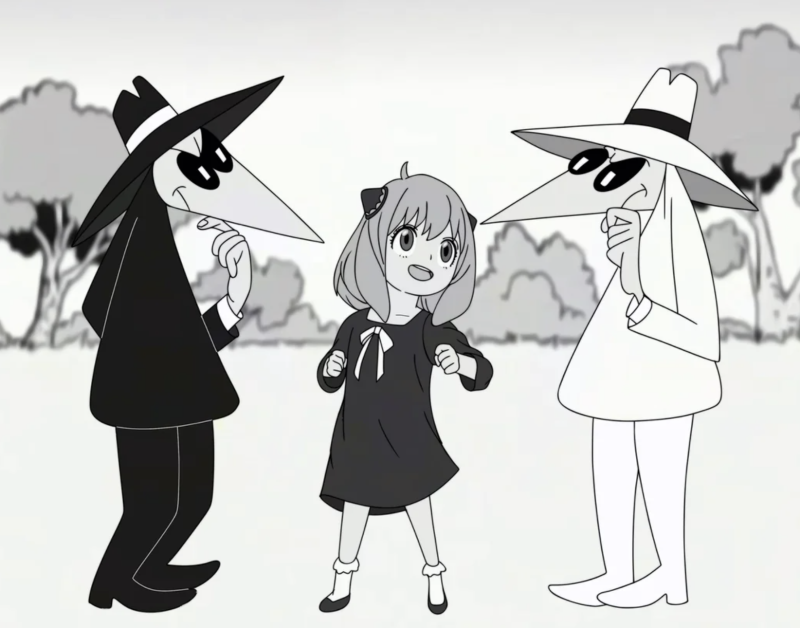
Spy vs. Spy: When Two Pointy-Hatted Spies Explained the World Better Than the News
Long before timelines were polarized, before algorithms decided what we should laugh at, and before “hot takes” replaced punchlines, two silent characters in trench coats were already explaining the absurdity of power, paranoia, and politics—without saying a word.
One wore white.
One wore black.
Both were identical.
Both were ruthless.
Neither ever truly won.

Welcome back to Spy vs. Spy.
How Spy vs. Spy Came to Be
Spy vs. Spy debuted in 1961 in Mad Magazine, created by Antonio Prohías, a Cuban cartoonist who had fled Fidel Castro’s regime. That origin story matters—because the strip wasn’t just slapstick. It was born from lived experience.
Prohías understood something deeply human and deeply political:
when ideologies collide, everyone looks ridiculous.
At the height of the Cold War—when the world was obsessed with espionage, nuclear standoffs, and “us vs. them” thinking—Spy vs. Spy distilled global anxiety into a perfect visual metaphor. Two spies, mirror images, endlessly sabotaging each other with increasingly elaborate traps.
No dialogue.
No moral winner.
Just escalation.
It was satire at its sharpest.
Why Mad Magazine Was the Perfect Home

Mad Magazine thrived on irreverence. It mocked politicians, consumer culture, war, advertising, and authority itself. Spy vs. Spy fit perfectly because it required no translation.
You didn’t need to understand American politics to get it.
You didn’t need to read English.
You didn’t even need context.
You only needed to understand one universal truth:
Power struggles often end in mutual destruction.
That universality made it one of Mad’s most enduring and recognizable features—alongside Alfred E. Neuman’s grin.
Who Was the Audience? (Hint: Everyone)
Officially, Mad targeted teenagers and young adults. In reality, Spy vs. Spy reached much further.
1. Kids loved the slapstick and visual gags
2. Teens caught the rebellious tone
3. Adults recognized the geopolitical satire
It was one of those rare comics that aged upward. You could revisit it years later and suddenly realize:
“Oh… this wasn’t just funny. This was smart.”
Why We’re Seeing Less of Comics Like This Today
So why don’t we see many modern equivalents?
Several reasons:
1. Silence Is Risky Now
Spy vs. Spy succeeded without words. Today’s platforms reward constant explanation, captions, context, commentary, and reaction. Ambiguity doesn’t trend well.
2. Satire Has Become Literal
Modern discourse often feels like satire already. When reality itself is absurd, satire struggles to exaggerate it meaningfully.
3. Cultural Fragmentation
Spy vs. Spy worked because it targeted shared global anxieties. Today’s audiences are fractured into niches, timelines, and echo chambers.
4. Algorithms Prefer Outrage Over Irony
Subtlety doesn’t perform as well as rage, dunking, or viral extremes.
Ironically, Spy vs. Spy warned us about this exact escalation.
Why Spy vs. Spy Feels Relevant Again
Here’s the twist: Spy vs. Spy might be more relevant now than ever.
• Black vs white
• Left vs right
• Us vs them
• Platforms vs platforms
• Nations vs nations
Everyone convinced they’re the “good” spy.
Everyone building traps.
Everyone stepping into someone else’s.
The strip reads today like a silent commentary on:
• Political polarization
• Online culture wars
• Geopolitics
• Corporate rivalries
• Even social media behavior itself
Two identical figures, convinced they’re different, locked in endless retaliation.
That hits harder in 2025 than it did in 1961.
The Cult Following: Why Fans Still Worship It

Spy vs. Spy never disappeared—it went underground.
Its cult followers:
• Share panels as memes
• Reference it in political commentary
• Use it as shorthand for “mutually assured nonsense”
• Treat it as a design and storytelling masterclass
• The strip’s minimalist style, symmetry, and visual timing have made it a favorite among designers, animators, and meme creators.
It’s also endlessly reinterpretable—which is why it survives.
Social Media’s Relationship With Spy vs. Spy
Social platforms didn’t create Spy vs. Spy, but they accidentally rediscovered it.
a. Panels circulate during elections
b. Images resurface during geopolitical conflicts
c. Memes use the characters to comment on corporate or tech rivalries
The irony? A comic built on silence thrives in a noisy digital age precisely because it doesn’t shout.
It lets the audience do the thinking.
Global Reception: Why It Traveled So Well
Because Spy vs. Spy relied on visuals, not language, it resonated globally.

Readers in:
1. Europe saw Cold War absurdity
2. Latin America saw ideological betrayal
3. Asia saw power struggles
4. The Middle East saw endless cycles of retaliation
Each culture projected its own conflicts onto the same two characters.
That’s rare. And powerful.
Spinoffs and Extensions
Over the years, Spy vs. Spy has spawned:
1. Animated shorts
2. Video games
3. Merchandise
4. Cameos in pop culture
Yet none ever surpassed the original print format. The simplicity was the magic.
How Do We Revive This Kind of Storytelling?
To bring back storytelling like Spy vs. Spy, creators and platforms would need to:
Trust the audience again — let people interpret
Embrace visual intelligence over explanation
Reward subtlety, not just shock
Create characters that symbolize ideas, not just personalities
Allow satire to be uncomfortable, not partisan

In short: less noise, more meaning.
Final Thought
Spy vs. Spy didn’t tell us who was right.
It showed us what happens when everyone is convinced they are.
In a world louder, faster, and more divided than ever, two silent spies from a black-and-white comic might still be telling the clearest truth of all.
Sometimes the smartest commentary doesn’t need words.
By [Tommy Thounaojam] Editor TrendBrewers