Resurrecting My Netflix Subscription (Again): Guillermo del Toro’s Frankenstein Looks Too Gorgeous to Miss
Guillermo del Toro’s Frankenstein (2025): a gothic, mythic reinvention so gorgeous you’ll resurrect your Netflix subscription to see it.
By [Tommy Thounaojam] Editor TrendBrewers
It’s that time of the month again — the part where I pretend to “budget responsibly,” only to realize my Netflix account has expired again. I was doing so well too! No late-night binges, no impulsive “just one more episode” clicks… and then BAM — Guillermo del Toro shows up with a trailer so visually luscious it might as well have whispered, “reactivate your subscription, you weak mortal.”
The new adaptation of Frankenstein; or, The Modern Prometheus (1818) by Mary Shelley, directed by Guillermo del Toro and starring Oscar Isaac as Victor Frankenstein, is already stirring up a lot of excitement—especially for how markedly different it appears from “usual” Frankenstein films. Below is a breakdown of what makes this version distinct, why the director chose an OTT-first release (with a limited theatrical run), how this compares with past Frankenstein films (in tone, box-office, and critical reception), as well as a look at non-Hollywood Frankenstein takes and some recommendations for visually and tonally similar films.
What’s different about this version
Del Toro has stated the project has been more than 30 years in the making: “It took 30 years. It’s a movie I wanted to make before I even had a camera.”
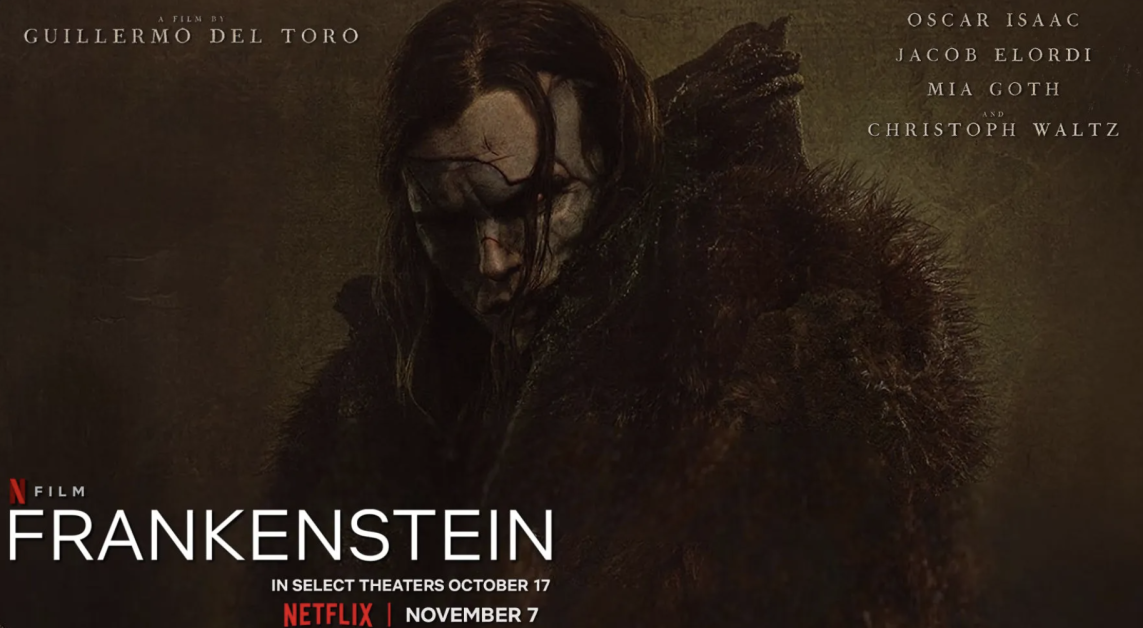
Visually, the first footage emphasises a very rich, gothic, almost operatic tone: dramatic lighting, strong mood, heavy production design.
Del Toro himself explained the colour‐coding: the film “opens and closes with very limited colours — white, blue, and gold” and uses the Arctic sequence as a framing device.
The creature design is deliberately different: del Toro says he didn’t want symmetric scars or the usual clamps and bolts, but rather a kind of “jigsaw puzzle” of corpses.
Although the story originates in Shelley’s novel, del Toro emphasises emotional resonance: he told reporters he is “asking a question about being a father, being a son… I’m not doing a horror movie—ever” in the conventional sense sources at Reddit
According to early reviews, the creature is portrayed almost superhuman/invincible, shifting the narrative away from purely horror into mythic territory.
2. A re-imagination rather than simple remake
The trailer and first looks hint at “more mythical approach rather than the more grounded approach” you mentioned. Indeed, critics note del Toro shifts the perspective: more of a tragedy, more operatic, more layered with human emotion rather than just jump-scares or monster tropes.
Oscar Isaac has commented on the scene of the Creature’s creation: “The way it was approached was very romantically; it wasn’t approached like your classic kind of horror, lightning everywhere.”
This version shifts focus: for example, in old versions the “monster” is the scary bit; here del Toro frames the real monster as the hubris/creator, humanity’s treatment of the outsider, and so on.
3. Casting & performances
Oscar Isaac as Victor Frankenstein marks a bold choice: del Toro said he didn’t want a stereotypical “mad scientist”. He wanted someone grounded, charismatic, conflicted.
Jacob Elordi plays the Creature and reportedly does “most of the emotional heavy-lifting”. Early reviews say he “steals the show”.
4. Production length and development
While exact track of shoot length isn’t fully public, del Toro has said the idea has been simmering for 30+ years.
The film premiered at the 2025 Venice Film Festival (August 2025) and had its limited theatrical release 17 October 2025, before streaming on Netflix on 7 November 2025.

Why the limited theatrical + OTT release?
According to official sources: the film will be in theatres (select) and then on Netflix globally from 7 Nov 2025.
In an interview, del Toro emphasised: “For the love of God: see this in a movie theatre if you can.” He insisted the film was shot for theatrical scope (35mm, IMAX etc.).
However industry chatter notes the theatrical run is very limited.
Possible reasons:
Streaming platforms (like Netflix) increasingly use limited theatrical runs to qualify for awards while leaning into global streaming reach.
A director like del Toro gets scale and production value; but market signals may favour OTT for reaching global audiences faster, especially niche/high-art genre films.
The visual and gothic style does lend itself to big screen, but the business model may favour streaming for this particular release.
From your perspective (“where such high visual movies are to be enjoyed on the big screen”): you’re absolutely right — the visual ambition here is huge, and many viewers feel that the limited theatrical release is a bit of a shame. Many reviews say the film deserves big-screen treatment.
How previous Frankenstein movies have done (tone, box-office, critics)
- The Frankenstein story has had many iterations: horror, gothic, comedy, thriller, superhero hybrid.
- Example: The original Frankenstein (1931) by James Whale (Universal) is iconic, standing at 94% on Rotten Tomatoes in its franchise listing.
- The Revenge of Frankenstein (1958, Hammer) is also well-regarded (87% on RT).
On the other hand, modern/commercial takes such as I, Frankenstein (2014) fared poorly critically (4% RT) and commercially were mixed.
Box office data: For example, Frankenstein (1994) (Kenneth Branagh’s version) grossed about US$112 million worldwide (with $22 million domestic, about $90 million international).
Critical reception of the new del Toro version: early reviews praise visuals and ambition but note pacing/tonal issues. Its Rotten Tomatoes score is solid (above 75%) though perhaps not the highest in del Toro’s catalogue.
Tone comparison

Older versions (1930s-1950s) leaned heavy on horror, monster spectacle, gothic ambiance.
Some versions turned comedic/parodic (e.g., Young Frankenstein (1974), a Mel Brooks comedy).
Del Toro’s version seems to blend the gothic horror roots with mythic, almost superhero/immortal-monster flavour — more emotional, tragic, grand in scale. So if you’re used to the comedic takes, this version will feel more serious and stylised.
Non-Hollywood / International Frankenstein versions worth noting
Yes — there are Frankenstein adaptations and inspired works outside the U.S. Here are a few:
a) Tender Son: The Frankenstein Project (Hungary, 2010) — loosely based on Shelley’s novel; screened at Cannes.
b) Flesh for Frankenstein 1973, Italian/West German) — an avant-camp/schlock take produced by Andy Warhol.
c) Frankenstein’s Castle of Freaks (Italy, 1974) — cult Italian horror.
While these may not always be “faithful” adaptations, they demonstrate the global resonance of the Frankenstein myth. If you prefer different cultural spins (e.g., European, art-house) they’re worth exploring.
Recommendations: Films with a similar tone/feel

1. The Bride of Frankenstein (1935) – One of the classic Frankenstein films: gothic, dramatic, influential.

2. The Shape of Water (2017) – Also by del Toro; a monster romance with obsessive visual style.
3. Pan’s Labyrinth (2006) – Guillermo del Toro’s own masterpiece: blends fairy-tale, horror, myth, monsters and deep human emotion.
4. The Witch (2015) – A modern gothic horror: period setting, dark visuals, mythic undertones.
5. Stoker (2013) – Less monster-myth but strong in gothic visuals, family dysfunction and dark atmosphere.
In summary
Del Toro’s Frankenstein stands apart: richly gothic, visually opulent, and emotionally profound — more mythic meditation than pure horror. Its grand, theatrical style aligns with today’s film-distribution landscape: designed for the big screen, yet ultimately geared toward a global streaming audience. Past Frankenstein adaptations range from iconic horror classics to campy comedies and uneven modern retellings; Del Toro’s vision bridges gothic terror and epic mythic drama. While international interpretations are rarer, they offer intriguing variations worth exploring. If you’re drawn to the film’s lush visual and tonal sensibility, the suggested titles above will resonate.