MrBeast Shows and the Rise of Algorithmic Entertainment.
How MrBeast transformed YouTube into a spectacle-driven reality TV empire—and why critics say the model may be creatively hollow.
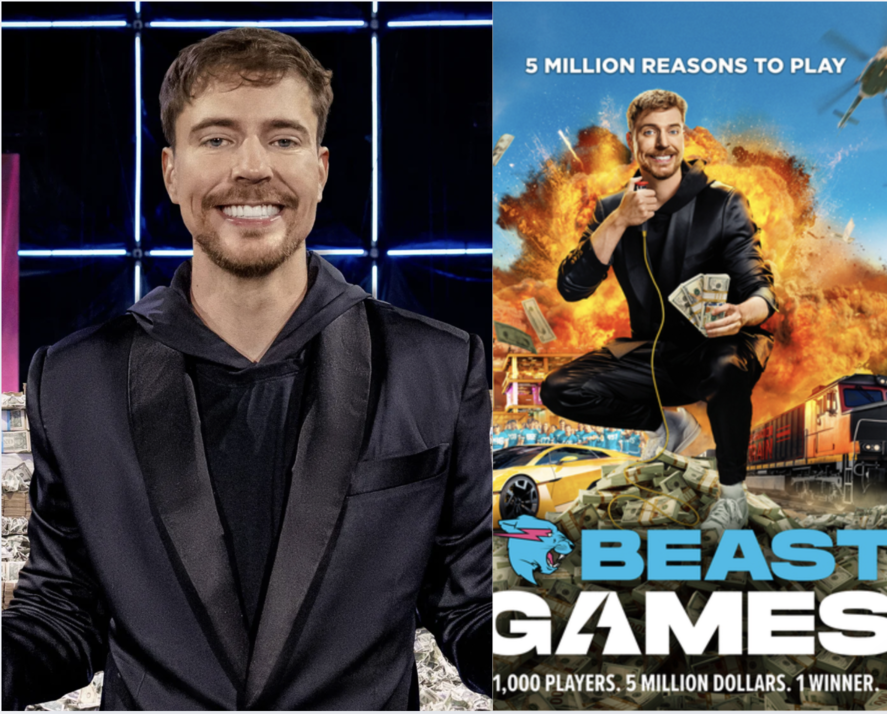
How Spectacle, Scale, and Commercial Logic Are Redefining Modern Reality TV
Jimmy Donaldson, widely known as MrBeast, is no longer best understood as a YouTuber. He is better analyzed as a media system—one that blends reality television, globalized game design, algorithmic optimization, and direct-to-consumer commerce into a single repeatable format.
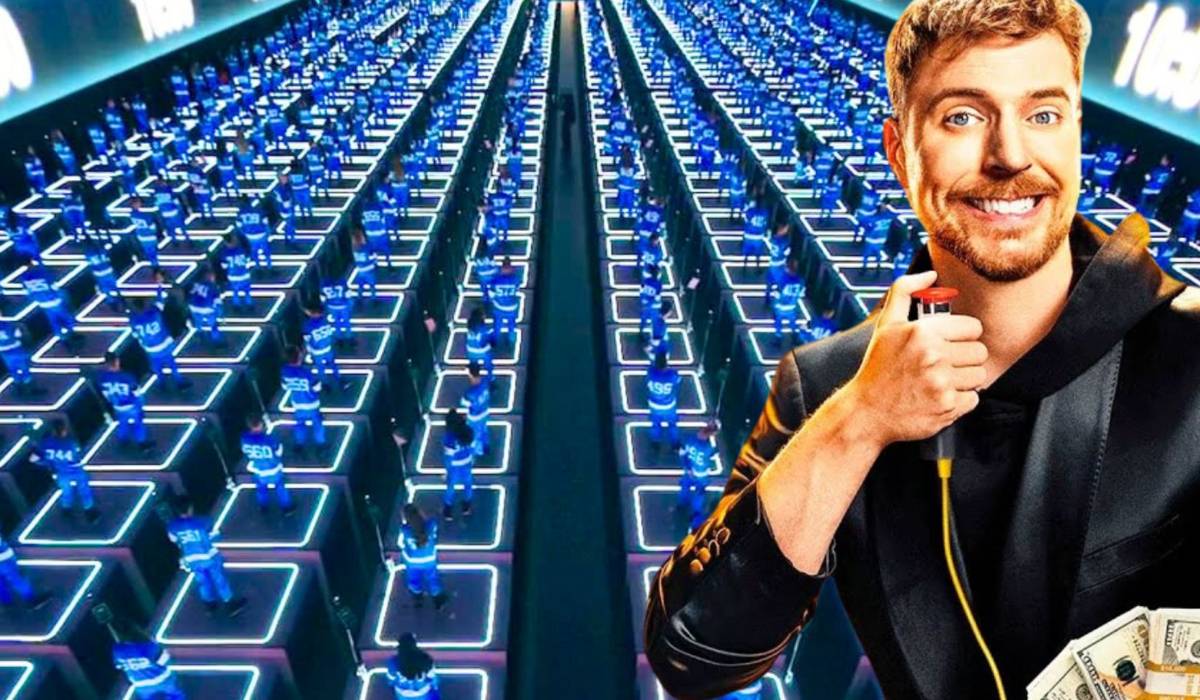
His shows regularly feature extreme challenges, high-stakes eliminations, and competitions that pit mental strategy against physical endurance. They are watched by hundreds of millions and praised for their scale. Yet they are also increasingly criticized for being derivative, commercially saturated, and emotionally engineered.
This article examines MrBeast’s shows not through the lens of popularity, but through structure, influence, and long-term cultural impact.
From Creator to Format: Why MrBeast’s Shows Matter
MrBeast’s importance lies less in individual videos and more in what his productions represent:
the industrialization of creator content.
Where earlier YouTubers relied on personality and spontaneity, MrBeast relies on:
Repeatable formats
Data-driven creative decisions
Studio-level production teams
Guaranteed audience retention mechanics
His shows signal a turning point where YouTube content no longer competes with television—it imitates and optimizes it.
The Core Formula: Intelligence vs Strength as Engineered Conflict
A recurring motif in MrBeast’s shows is the contrast between:

Smart vs strong
Strategic vs physical
Cooperative vs selfish
On the surface, this appears to be social experimentation. In practice, it is highly legible conflict design.
These binaries work because they:
Translate globally across cultures
Require no exposition
Create immediate emotional alignment
However, the simplicity also limits depth. Intelligence and strength are rarely explored meaningfully. They function as narrative labels, not complex human traits. The outcome is drama that feels intense but resolves too neatly to linger.
Squid Game, Korean Reality TV, and the Question of Originality
The influence of Squid Game and Korean survival formats is unmistakable.

MrBeast’s productions share:
Childhood game aesthetics
Bright, minimalist sets
Escalating elimination mechanics
Group pressure framed as entertainment
While his recreations remove violence, they preserve the psychological architecture of these shows. What is missing is context.
Where Squid Game used competition to critique inequality and desperation, MrBeast’s adaptations largely remove social commentary, replacing it with cash incentives and spectacle. The result feels less like reinterpretation and more like extraction—borrowing form while discarding meaning.
Nostalgia as Optimization: Old TV for Shorter Attention Spans
Many MrBeast shows resemble earlier formats such as:
Fear Factor
Survivor
Wipeout
Big Brother
Takeshi’s Castle
But these are not revivals. They are compressed derivatives, stripped of slow-burn storytelling and rebuilt for modern retention curves.
Earlier reality television thrived on time—alliances forming, tensions simmering, personalities evolving. MrBeast’s shows replace that with immediacy, escalation, and constant payoff.
What is gained is speed. What is lost is memory.
Commerce as Content: When the Brand Becomes the Narrative
One of the defining—and most polarizing—elements of MrBeast’s shows is direct brand integration.

His own products, such as Feastables, are not placed around the content; they are embedded into it. They are framed as rewards, symbols of generosity, and moral conclusions.
This approach is unusually explicit. Supporters argue it is honest and funds free content. Critics argue it collapses the boundary between emotion and advertisement, turning generosity into a marketing mechanism.
In MrBeast’s universe, entertainment does not interrupt commerce.
Commerce is the entertainment.
Amazon and Beast Games: Disruption or Assimilation?
Amazon’s partnership with MrBeast on Beast Games was widely framed as validation for creator-led entertainment.
In reality, it reveals something more complex.
Amazon gains:
A massive, pre-built audience
Youth demographic relevance
Reduced creative risk
MrBeast gains:
Studio budgets
Global distribution
Institutional legitimacy
But the partnership also signals a return to traditional media structures. Rather than replacing studios, the most successful YouTube creator has effectively joined one.
This raises an uncomfortable question:
If creator content must eventually rely on legacy platforms to scale further, how disruptive was it really?
Production Costs and the Logic of Excess
Reported estimates suggest:
Smaller videos cost hundreds of thousands of dollars
Large-scale YouTube productions reach several million
Amazon-backed shows run into the tens of millions
These budgets deliver scale—but not necessarily substance.
Larger sets, more participants, and bigger prizes do not automatically produce more meaningful narratives. In many cases, the additional spend amplifies spectacle while leaving the underlying structure unchanged.
The question becomes not “Can this be bigger?”
But “Should it be?”
Are MrBeast Shows Scripted or Genuine?
The most accurate description is structurally genuine, narratively controlled.
Challenges are real
Participants are real
Outcomes are not pre-written
Yet the emotional arc is carefully engineered through:
Rule design
Editing
Confessional framing
Music and pacing
This places MrBeast’s shows squarely in the tradition of manufactured reality television, rather than spontaneous social experimentation.
Logistics, Isolation, and the Invisible Production Machine
Participants often remain on set for extended periods under controlled conditions. Eliminated contestants are removed quietly, typically bound by NDAs, and rarely heard from again.
Behind the scenes, production resembles a mid-sized television studio:
Safety coordinators
Legal oversight
Medical teams
Editors working in shifts
This professionalization contrasts sharply with the on-screen image of casual generosity and spontaneity.
Audience Response: Engagement Without Endurance
There is no disputing the metrics:
Massive views
High engagement
Strong emotional reactions
But cultural endurance is harder to measure.
Many viewers remember the scale, not the stories. Individual episodes blur together, raising a central concern for long-term relevance:
"Is this content being remembered—or merely consumed?"
Critical Reception: Efficient, Loud, and Hollow
Critics often describe MrBeast’s shows as:

Overproduced
Morally simplistic
Commercially aggressive
Emotionally manipulative
The most persistent critique is not that the shows fail—but that they succeed too perfectly within the constraints of the algorithm.
They represent entertainment optimized to function, not to challenge.
Conclusion: MrBeast as the Endpoint of Platform Logic
MrBeast has not simply mastered YouTube.
He has revealed its logical conclusion.
His shows demonstrate what happens when:
Attention becomes the primary metric
Generosity becomes branding
Creativity becomes optimization
Whether this model defines the future of entertainment—or marks a creative plateau—will be clearer in hindsight.
What is certain is that MrBeast’s legacy will not be a single show, but a system:
one that transformed spectacle into strategy, and content into infrastructure.
By [Tommy Thounaojam] Editor TrendBrewers