
The Calvin and Hobbes Strips We Keep Returning To
Explore the most popular Calvin and Hobbes strips, why fans still search for them, and how Bill Watterson’s comics shaped imagination, nostalgia, and morality.
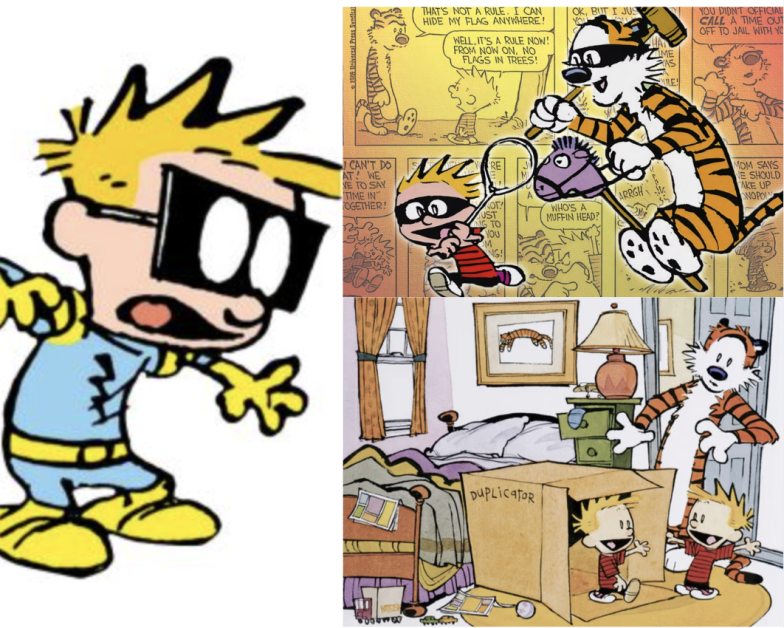
Before childhood became scheduled, optimized, and endlessly documented, it was powered by imagination. Before screens filled every quiet moment, there was a boy, a tiger, and a strip of newspaper that asked bigger questions than it ever answered.
For many readers, Calvin and Hobbes wasn’t just a comic — it was a ritual. A pause in the day. A small window into a world where curiosity mattered more than correctness and imagination was not yet something to outgrow. Decades later, in an age of infinite scrolling and disposable content, people are still searching for these strips. Not because they are new, but because they are honest.
The strips that remain most popular today — the ones most frequently shared, quoted, discussed, and searched — are not simply the funniest. They are the ones that captured something enduring about childhood, morality, and the quiet complexity of growing up. Together, they form a map back to a slower way of seeing the world.
Below are the ten most beloved Calvin and Hobbes strips, based on long-standing fan discussion, reposting behavior, quote searches, and cultural impact — along with why they continue to resonate with modern readers.
1. Scientific Progress Goes “Boink”
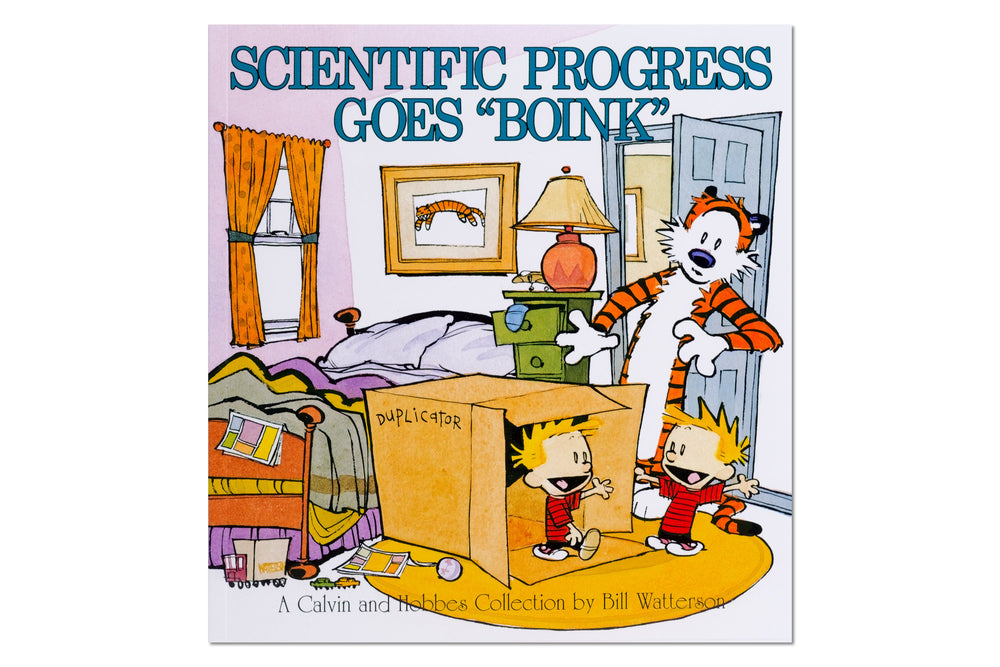
Perhaps the most iconic Calvin and Hobbes strip of all time, “Scientific Progress Goes Boink” distills Calvin’s worldview into a single moment of chaotic ambition. A machine designed to enhance intelligence instead delivers absurdity — and a lesson.
Fans return to this strip because it works on multiple levels. As children, it’s funny. As adults, it becomes satire. It questions blind faith in progress, mocks technological arrogance, and reminds us that intelligence without wisdom often collapses under its own weight.
Its enduring popularity lies in its simplicity: one word, boink, says everything.
2. Calvin and His Father Playing in the Snow
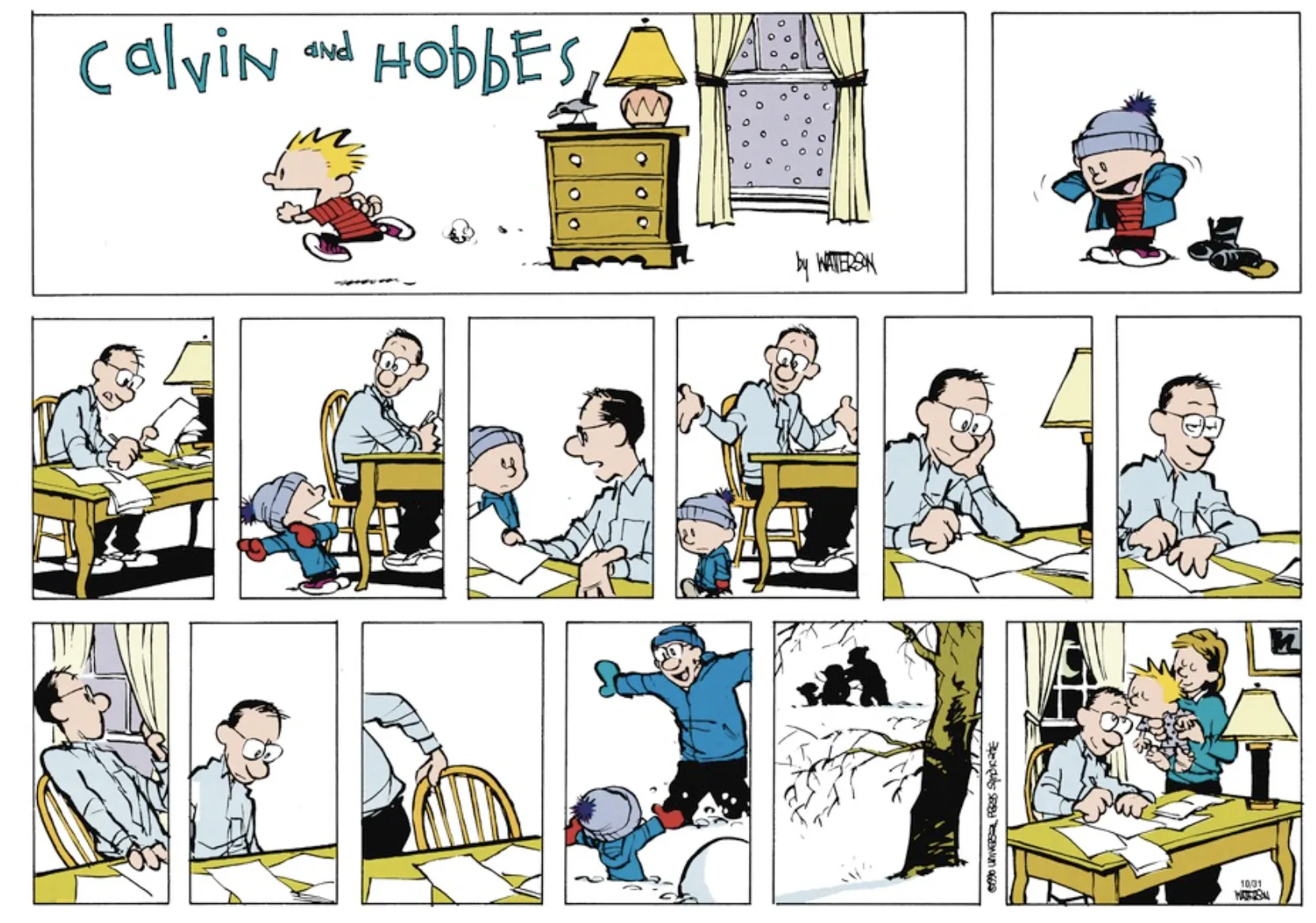
These winter strips — especially the quiet moments of Calvin and his dad walking, sledding, or simply being together — are among the most reposted Calvin and Hobbes comics online.
What makes them powerful is restraint. There’s no punchline. Just warmth, presence, and the fleeting nature of childhood. Modern readers return to these strips not for humor alone, but for comfort. They represent the version of parenting that values time over instruction — something increasingly rare.
Every winter, these strips resurface because they remind us of something we didn’t know we were losing while we still had it.
3. The Raccoon Story Arc
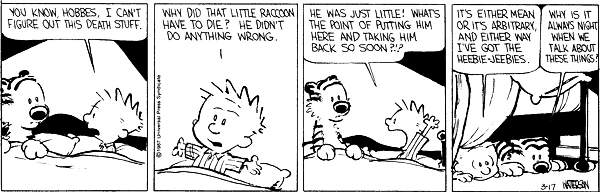
Few comic strips handle loss with as much quiet dignity as the raccoon storyline. Calvin’s encounter with an injured raccoon introduces mortality without spectacle or explanation.
Fans often cite this arc as proof that Calvin and Hobbes was never “just a comic.” There is no joke to soften the moment. Only empathy, confusion, and acceptance.
Its popularity persists because it reflects how children actually encounter grief — indirectly, awkwardly, and without the language adults expect. In a media landscape that often overexplains emotion, this strip trusts silence.
4. “It’s a Magical World, Hobbes Ol’ Buddy”

Few lines in comic history are as frequently quoted as this one. Often shared without context, the strip captures something rare: optimism without naïveté.
Calvin’s declaration is not denial of reality, but a choice to engage with it openly. That’s why this strip remains popular across generations. It appears in graduation speeches, framed prints, and social media posts because it speaks to a desire we don’t outgrow — the hope that wonder can survive responsibility.
5. Spaceman Spiff Strips
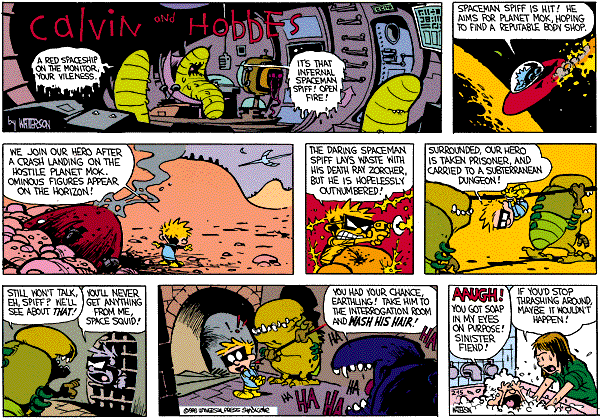
Spaceman Spiff is Calvin’s ultimate escape artist — a fearless space explorer created to flee boredom, school, and authority. These strips remain highly searched because they visualize imagination as resistance.
What resonates most with modern readers is how clearly Spaceman Spiff mirrors adult escapism. The fantasy isn’t about space — it’s about freedom. The dramatic artwork, sudden shifts in tone, and exaggerated danger all reflect how the mind wanders when reality feels confining.
6. The Philosophical Strips
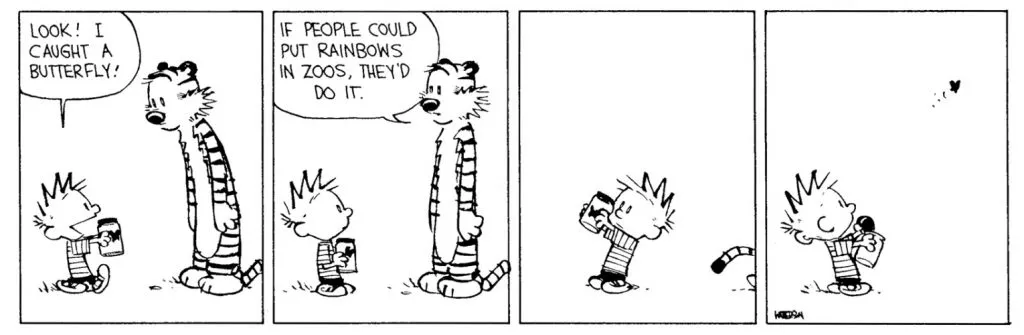
Some Calvin and Hobbes strips linger not because they’re funny, but because they’re unsettling. These are the strips where Calvin questions war, adulthood, conformity, or the meaning of existence itself.
Fans frequently share these panels in essays, classrooms, and discussions about philosophy and ethics. Their popularity lies in how gently they introduce big ideas. Watterson never lectures. He simply lets a child ask questions adults have learned to ignore.
7. The Snow Goons and Snowman Series

The snowman strips are some of the most visually creative in the entire series — playful, dark, and mischievous. Calvin’s snow creations are absurd works of temporary art, meant to melt.
Their seasonal popularity is no accident. These strips celebrate creativity without permanence. They mock seriousness while honoring effort. In a culture obsessed with productivity and legacy, the Snow Goons remind us that making something just because is enough.
8. Stupendous Man
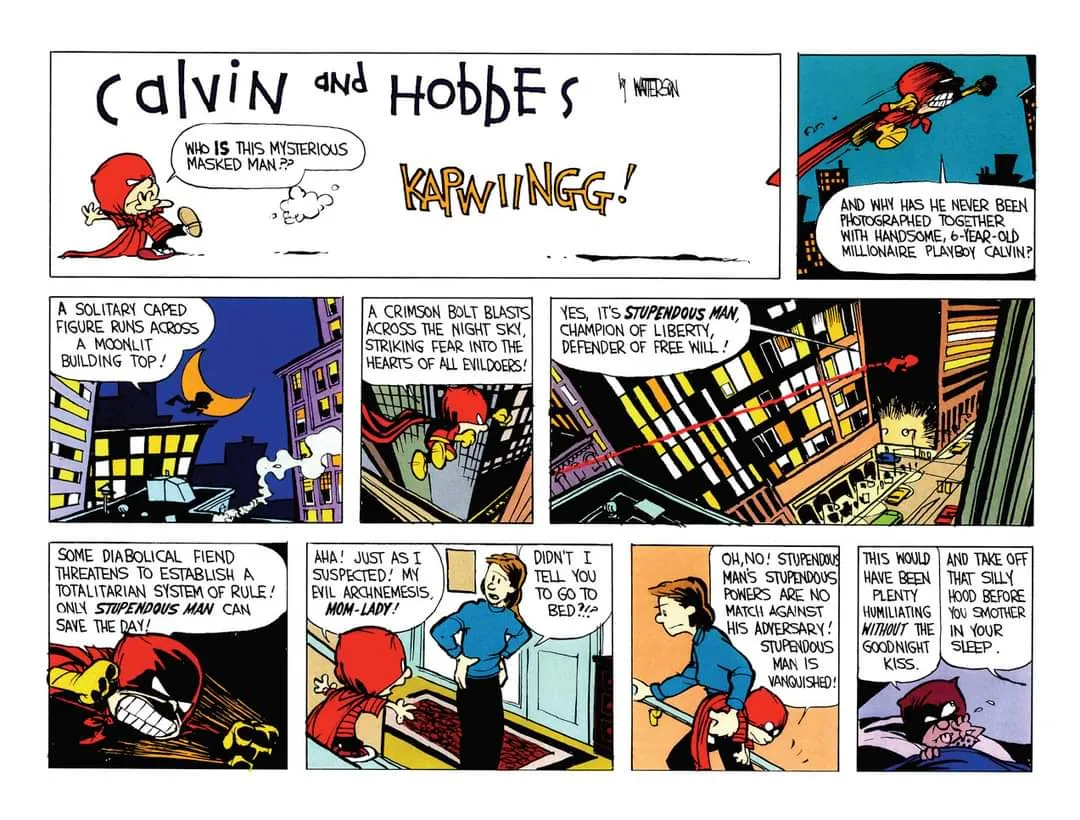
Calvin’s superhero alter ego is arrogance, imagination, and childhood bravado wrapped into one. Stupendous Man strips parody heroism while revealing something honest about ego and self-perception.
Fans love these strips because they capture the way children experiment with identity. Calvin isn’t pretending to be heroic — he’s trying to understand power. That curiosity, and the inevitable failure that follows, is endlessly relatable.
9. Calvinball
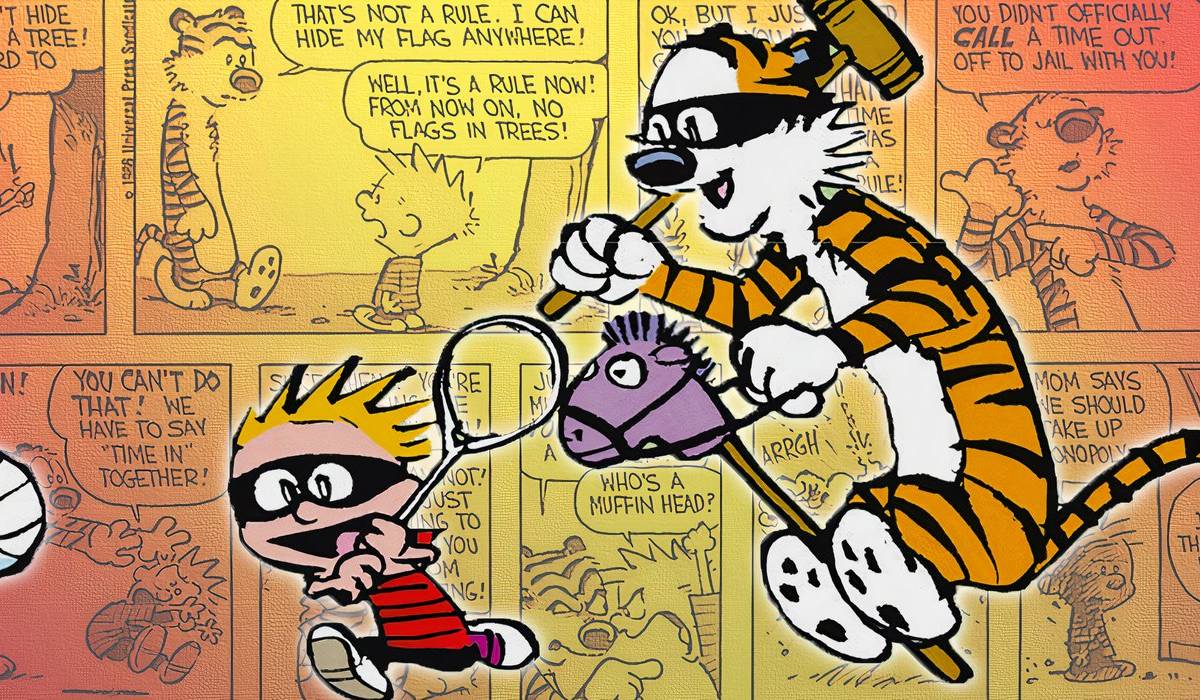
Calvinball has no rules — and that’s the point. The strips featuring this ever-changing game are among the most searched because readers want to understand it, define it, and explain it.
But Calvinball resists explanation. It’s a satire of over-structured systems, organized sports, and adult obsession with order. Its popularity endures because it validates something we all felt once: that play doesn’t need permission to be meaningful.
10. “Supper Smelled Like Bat Barf”
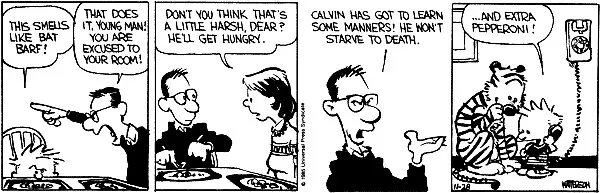
This strip is often remembered as the first Calvin and Hobbes comic that truly hooked readers. Short, sharp, and unmistakably Calvin, it captures childhood rebellion in its purest form.
Fans return to it because it sounds exactly like a child — unfiltered, dramatic, and deeply sincere. It’s a reminder that humor doesn’t need complexity to feel true.
Why These Strips Still Matter
Taken together, these ten strips do more than entertain. They reveal a worldview. Calvin and Hobbes treats morality not as instruction, but as exploration. There are no villains — only learning curves.
Earlier art like this endured because it trusted its audience. It trusted children to think deeply and adults to remember honestly. The popularity of these strips today isn’t driven by nostalgia alone, but by recognition. We see ourselves in Calvin’s defiance, Hobbes’ quiet wisdom, and the shared understanding that growing up doesn’t mean surrendering wonder.
In revisiting these strips, we aren’t just remembering childhood — we’re reclaiming a moral language shaped by empathy, imagination, and restraint. In a world that often tells us what to think, Calvin and Hobbes reminds us how to feel our way forward.
And perhaps that’s why, even now, these strips remain among the most searched, shared, and cherished works of comic art ever created.
It’s a magical world, Hobbes… let’s go exploring.
By [Tommy Thouanaojam] Editor TrendBrewers