
Boong: A Quiet Revolution from Manipur That Redefines Indian Cinema
A review of Boong by Lakshmipriya Dev, backed by Farhan Akhtar. A powerful Manipuri film redefining Indian cinema with authenticity and global acclaim.

In an era where spectacle often overshadows substance, Boong arrives like a whisper that echoes louder than noise. Directed by Lakshmipriya Dev and backed by Farhan Akhtar and Ritesh Sidhwani, this film is not merely a cinematic release—it is a cultural moment.

For those who have followed Farhan Akhtar’s journey—from the emotionally layered war drama Lakshya to his commitment to realism in projects like 120 Bahadur—there has always been a visible pattern: research, authenticity, and refusal to compromise on emotional truth. His backing of Boong signals not just confidence in the script, but belief in a new cinematic geography.
And that geography is Manipur.
The Story: Simplicity as Strength
Boong does not rely on exaggerated drama or formulaic tropes. Instead, it draws its strength from everyday life in Manipur—its silences, its landscapes, its people, and its unresolved tensions.
The narrative unfolds with patience. It trusts the audience. It does not spoon-feed emotions. Instead, it allows characters to breathe. The film captures the rhythm of Manipuri life without romanticizing poverty or sensationalizing conflict. That restraint is precisely what makes it powerful.

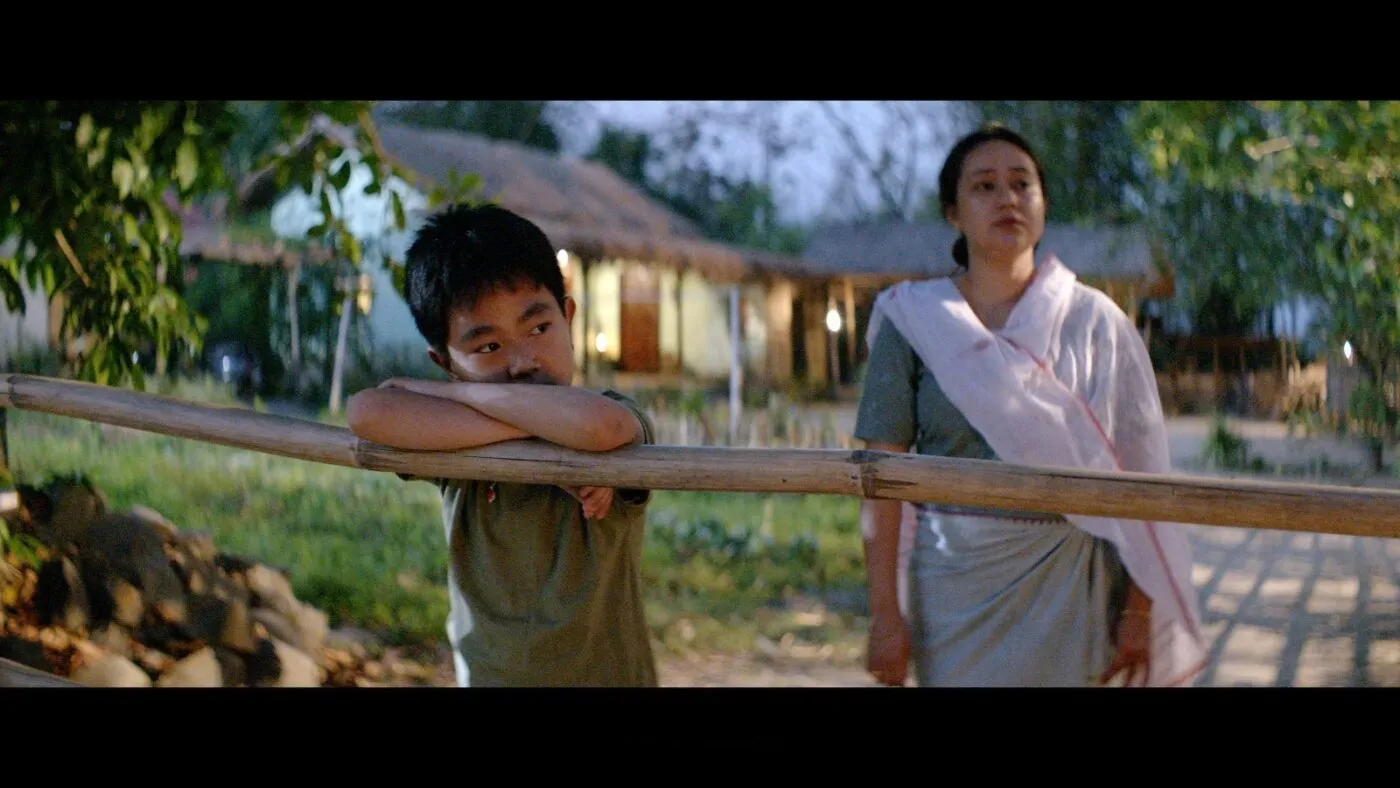
Lakshmipriya Dev’s direction is observant rather than intrusive. Her camera lingers—on faces, on pauses, on unspoken grief and hope. The detailing in costumes, dialect, body language, and setting reflects deep research and lived familiarity rather than surface-level representation.
This is not cinema about Manipur from an outsider’s gaze. This is cinema emerging from within.
Farhan Akhtar’s Backing: A Statement of Intent
Farhan Akhtar has consistently demonstrated that he values integrity over formula. In Lakshya, the transformation of a drifting young man into a soldier was built on military authenticity and psychological nuance. With 120 Bahadur, early indications suggest similar dedication to historical grounding.
By backing Boong, he steps away from mainstream comfort zones and supports regional storytelling without diluting it for pan-Indian consumption. This move reflects a broader shift—where Hindi cinema acknowledges that India’s most compelling stories may not originate in Mumbai.
Together with Ritesh Sidhwani, he provides the infrastructure and credibility while allowing Lakshmipriya Dev to retain creative authenticity. That balance is rare—and crucial.
Manipur: From Margin to Map
For decades, Manipur has been misunderstood or overlooked by mainland India. Yet it has consistently produced excellence—especially in sports, arts, and grassroots storytelling.
Boong does something powerful: it normalizes Manipur on screen.
Not as conflict.
Not as headline.
Not as exotic backdrop.
But as lived reality.
Through its landscapes and people, the film asserts that Manipur is not peripheral—it is central to India’s cultural fabric. And in doing so, it subtly challenges the hierarchical lens through which Indian cinema often views its own regions.
Lakshmipriya Dev showcases Manipuri elegance not as spectacle but as dignity—rooted in everyday life.
Craft and Technical Brilliance
What makes Boong stand out technically?
Naturalistic cinematography that captures Northeast India’s terrain without tourism aesthetics
Sound design that embraces silence instead of overbearing background scores
Performances that feel lived-in rather than performed
A screenplay that trusts subtext
There is a noticeable absence of melodrama. Instead, the emotional arc is internal. This discipline in filmmaking is what elevates Boong above louder contemporaries.
Global Recognition and BAFTA Context
When films rooted deeply in local realities resonate internationally, it validates a universal truth: authenticity travels.

Recognition at global platforms like the BAFTA is not accidental. Awards bodies increasingly acknowledge films that carry cultural specificity with emotional universality.
Boong does not compete through scale—it competes through sincerity.
And sincerity, when executed with craft, is formidable.
What Boong Means for Indian Cinema
Indian cinema stands at a crossroads.
For years, criticism around nepotism and monopolistic power structures—often dubbed the “Bollywood mafia”—has overshadowed discussions about craft. While mainstream entertainers have their place, films like Boong remind us that cinema’s true power lies in representation and truth.
This film sets a precedent:
Regional voices deserve national platforms.
Authentic storytelling can be commercially and critically viable.
Research and detail matter.
New filmmakers must be empowered, not sidelined.
If Indian cinema is to evolve globally, it must diversify internally.
Boong is not just a film. It is a blueprint.
A Personal Reflection: Why This Film Feels Different
There is something profoundly moving about watching a story told with care rather than calculation.
Farhan Akhtar’s consistent pursuit of quality—visible from Lakshya to his current ventures—finds a natural extension in supporting Lakshmipriya Dev. This is not trend-chasing; it is taste.
Boong feels handcrafted.
It does not shout.
It does not manipulate.
It does not conform.
Instead, it stands quietly—and that quiet strength is what makes it revolutionary.
Final Verdict
Boong is a triumph of heart, research, and cultural authenticity.
It places Manipur firmly on the cinematic map.
It validates regional storytelling at global forums.
It challenges formula-driven filmmaking.
It proves that detail and sincerity outshine spectacle.
Most importantly, it restores faith in what Indian cinema can be—if it dares.
Rating: 4.5/5 – A landmark in authentic Indian filmmaking.
By [Tommy Thounaojam] Editor TrendBrewers