
Silverscreen’s Favorite Dog Movies Ranked: From Hachiko to Marley
From Hachiko to Marley & Me, we rank the greatest dog movies by box office, critics, and cultural legacy — and what these loyal pets taught us.

Silverscreen’s Favorite Dogs: Loyalty, Loss, and Box‑Office Love
By blending box‑office muscle with emotional staying power, cinema’s greatest dogs have shaped how we think about loyalty, family, and grief. Ranked by global impact and critical affection — with Hachikō standing unchallenged at the top — this longform explores why these canine companions still matter.
The enduring pull of a dog on screen
No creature commands the silverscreen quite like a dog. They don’t need monologues or plot twists; a look at the door, a wag of the tail, a quiet wait can carry the emotional weight of an entire third act. Over decades, audiences across cultures have returned again and again to stories of dogs and their human companions — sometimes as spectacle, often as comfort, and occasionally as something close to myth.
This feature ranks five of cinema’s most beloved dog films, balancing global box‑office performance, critical reception, and cultural legacy. For each, we look at whether the story is rooted in real life, how the dogs are remembered beyond the screen, and what these films — and their failures — teach us about storytelling.

1.Hachi: A Dog’s Tale (2009) — The gold standard of loyalty
There are few film dogs whose influence extends beyond cinema into daily life. Hachikō is one of them.
Adapted from the true story of a Japanese Akita who waited for his deceased owner at Tokyo’s Shibuya Station for nearly a decade, Hachi: A Dog’s Tale is restrained, patient, and devastating in its simplicity. Richard Gere’s understated performance allows the dog’s devotion to remain the story’s emotional core.
Commercially, Hachi was never designed to dominate multiplexes. Its worldwide box office was modest by Hollywood standards, yet its cultural footprint is enormous. In Japan, Hachikō is remembered through statues, ceremonies, and school lessons — a national symbol of loyalty. The film carried that story to a global audience, transforming a local legend into a universal parable.
Based on a true story: Yes.
How Hachi is remembered: Bronze statues, annual remembrances, and a permanent place in popular culture. Few movie dogs have a physical monument visited daily by thousands of people.
Why it ranks #1: Emotional endurance. Long after opening‑weekend numbers fade, Hachikō still teaches audiences what unwavering devotion looks like.

2.Marley & Me (2008) — The dog who broke America’s heart
Based on journalist John Grogan’s bestselling memoir, the film follows Marley — an unruly Labrador retriever — as he tears through the lives (and furniture) of a young family. The movie was a global box‑office success, proving that audiences would line up for a dog story that promised laughter — and quietly prepared them for tears.
Critics were divided, but viewers embraced Marley as something deeply familiar: the pet who frustrates us daily and devastates us once gone.
Based on a true story: Yes, adapted from Grogan’s real‑life memoir.
How Marley is remembered: Through the book, the film, and countless personal essays that begin with some version of, “Our dog was a Marley.” The name has become shorthand for lovable misbehavior.
Why it ranks #2: Massive commercial reach paired with genuine emotional recall. Marley didn’t just succeed — he entered family folklore.
 .webp)
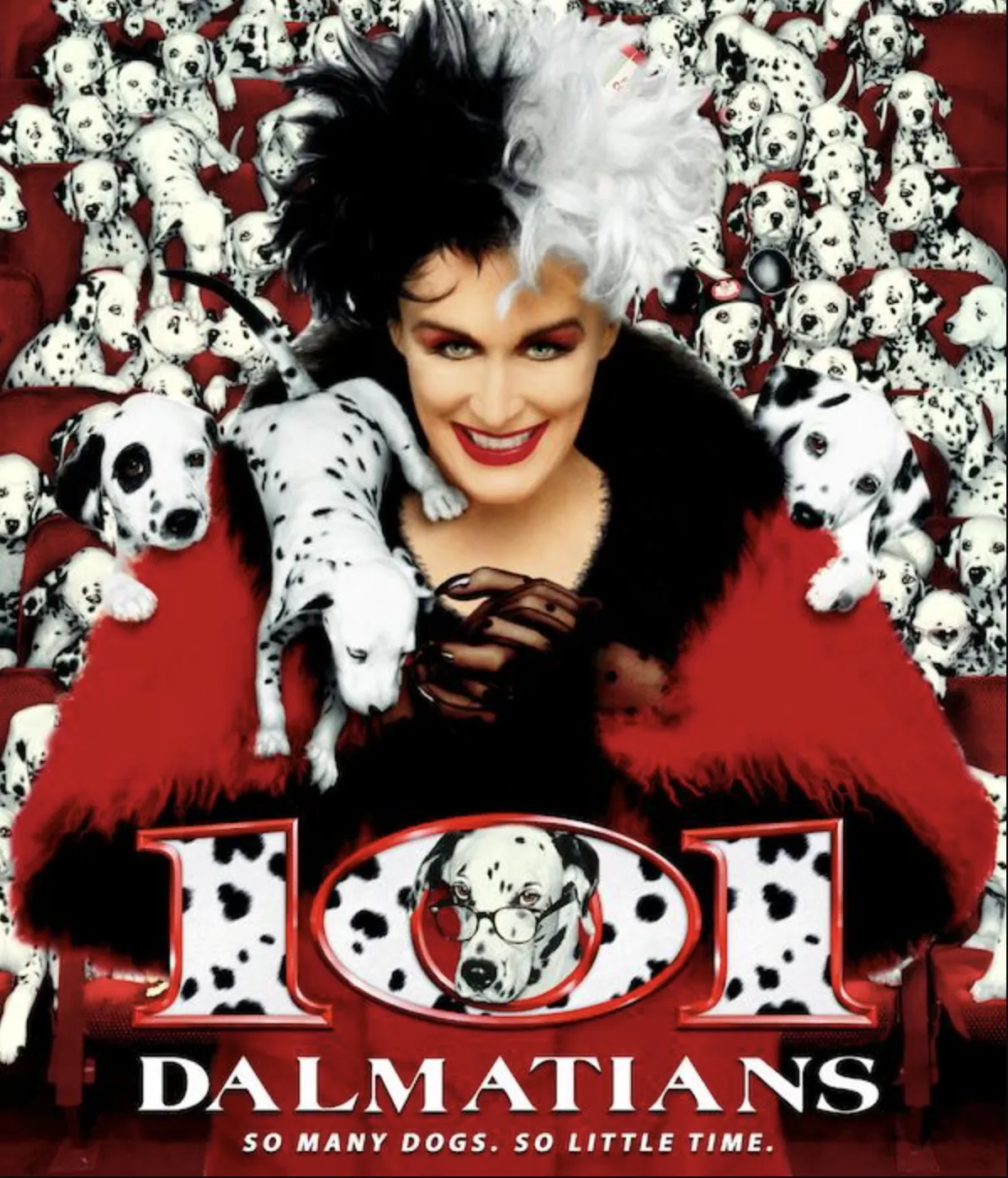
3.101 Dalmatians (1996) — Dogs as pop spectacle
Not all beloved movie dogs are intimate or realistic. Sometimes, they arrive in packs.
Disney’s live‑action 101 Dalmatians leaned heavily on nostalgia and spectacle, translating a classic animated property into a family blockbuster. Critics were lukewarm, but audiences showed up — in large numbers. The film’s global box office cemented its place as one of the most commercially successful dog‑centric live‑action films ever.
Based on a true story: No — adapted from Dodie Smith’s novel and Disney’s animated canon.
How the dogs are remembered: As characters rather than individuals. They live on through sequels, merchandise, and reinventions, especially alongside the enduring presence of Cruella de Vil.
Why it ranks #3: Proof that dogs, paired with strong intellectual property, can function as cinematic spectacle.
4.Bolt (2008) — Animated loyalty with a modern edge
With Bolt, Disney explored a different question: what happens when a dog believes he’s a superhero?
The result was an animated film that balanced humor, action, and sincere emotion. Bolt performed strongly at the global box office and earned some of the best critical notices on this list, praised for its heart and visual energy.
Though fully fictional and animated, the film taps into a real emotional truth — a dog’s need to belong and to be useful to their human.
Based on a true story: No.
How Bolt is remembered: As a modern Disney favorite, frequently rediscovered by families and younger viewers on streaming platforms.
Why it ranks #4: Animation allows emotional access without the constraints of live‑animal filmmaking — when done well, it deepens empathy.
.webp)
5. A Dog’s Purpose (2017) — Reincarnation, controversy, and connection
Few modern dog films sparked as much conversation as A Dog’s Purpose.
Following a single dog through multiple lives and owners, the film appealed strongly to audiences worldwide, generating a solid global box office. Critical response, however, was mixed, and the film’s reputation was complicated by public controversy surrounding animal‑welfare footage released during production.
The result is a movie remembered both for its emotional ambition and for the reminder that how films are made matters as much as what they say.
Based on a true story: No — adapted from a novel.
How the dogs are remembered: As emotional vessels rather than specific characters, and as part of a broader industry conversation about ethics in filmmaking.
Why it ranks #5: Audience demand was real, but legacy was diluted by trust issues.
 .webp)
What we learn — from hits and from flops
Why some dog movies endure
a. Authenticity beats spectacle.Hachi and Marley & Me succeed because they observe everyday life, not because they amplify it.
b. Dogs reflect us. The best films use pets to explore grief, responsibility, and unconditional love.
c. Memory matters more than opening weekend. Statues, memoirs, and repeat viewings often outlast box‑office rankings.
Why some pet movies fail
1. Oversized budgets create risk. Films like The Call of the Wild struggled to recoup massive production costs.
2. Unconvincing CGI breaks trust. Audiences notice when animals feel artificial.
3. Ethical missteps linger. Controversy can permanently alter how a film — and its message — is remembered.
Final word: why we keep returning to dogs
Dog movies endure because they bypass cynicism. They remind us of a simpler emotional contract: show up, stay loyal, love without conditions. Whether immortalized in bronze like Hachikō, remembered through a memoir like Marley, or rediscovered in animation, these dogs remain with us long after the credits roll.
In cinema, as in life, dogs don’t just support the story — sometimes, they are the story.