
Movie Review: The Timeless Art of Comedy, Music, and Cultural Nostalgia
Some movies are not just entertainment but an art that evolves, becoming a classic. Today, we will explore one such timeless movie, Padosan.

Bollywood cinema has frequently followed established narrative patterns, yet every so often, a film emerges that redefines the familiar through extraordinary execution. The movie Padosan, released in November 1968, is one such movie that has spanned generations, creating the same impact. Entertaining all age groups with relevant characters, immortal songs, theatrical chaos, and an emotional warmth that still feels fresh decades later.
Even today, its dialogues, like “Guru, tumhara naam kya hai?” or “Yeh pyaar ka chakkar bahut khatarnak hota hai,” seem very normal, but expressions and dialogue delivery make it memorable. Then some songs that continue to live through memes, stage performances, reels, family movie nights, and nostalgic conversations across generations. What makes it more classic is that the movie was directed by and produced by Mehmood, and he starred in it himself in the most iconic comedy performances in Indian cinema. Let's take a deeper dive into the script, characterization, and what makes this movie so different.
The Storyline of Padosan Movie: Simplicity That Became Genius
.jpg)
At its heart, Padosan is a simple story about a young man, Bhola, who is an innocent, socially awkward, and falls in love with his beautiful neighbor Bindu. Bhola is a simple man with no extraordinary talent, and the girl he likes is interested in art and music. Where Bhola cannot sing, dance, or impress her Bindu’s music teacher, Master Pillai can, so in a flamboyant way.
To help Bhola win her heart, his eccentric friend Vidyapati secretly sings for him while Bhola lip-syncs. This deception leads to hilarious misunderstandings, musical duels, and emotional chaos. With Bhola being the naive person he was, pulling up the whole charade was a task, which was eventually exposed. This enraged Bindu, and with a detour, finally, the true love succeeded.
The brilliance of the film lies in how ordinary the premise is. There are no complex twists or high-stakes drama. Yet the screenplay transforms a neighborhood romance into a theatrical masterpiece through timing, character chemistry, and Kishore Kumar's romantic song, creating musical magic.
The Characters of Padosan Movie: Why They Still Live In Our Memory
Bhola: The Innocent Everyman
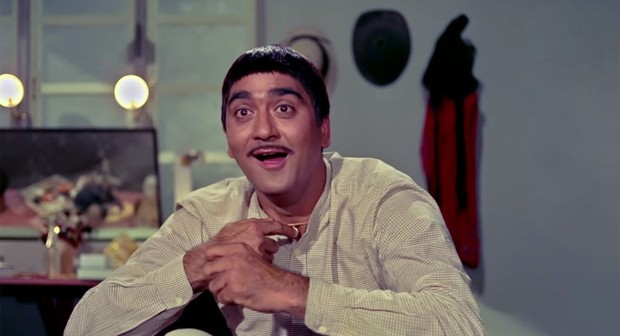
Sunil Dutt played Bhola with childlike sincerity rather than exaggerated comedy. His awkwardness, honesty, and vulnerability made audiences root for him instantly. Bhola represented the ordinary Indian man, and many related to this shy, emotional, and deeply romantic person who is hesitant to express yet wanna impress their true love. Instead of making him a “heroic” lead, the film embraces his imperfections. That emotional realism is why viewers still connect with him today.
Vidyapati: The Soul of the Film

If Bhola is the heart, Vidyapati, played by Kishore Kumar, is the madness that gives the film life. created a character overflowing with theatrical energy, unpredictability, and musical brilliance. With his own voiceover songs, he created magic. Vidyapati, as a character, is not just comic relief; he represents artistic freedom. His exaggerated body language, spontaneous humor, and musical improvisation feel almost anarchic for mainstream Hindi cinema of the 1960s. Many scenes feel less “acted” and more like controlled chaos, which is precisely why they remain memorable.
Master Pillai: Comedy Through Rivalry

Master Pillai, played by Mehmood Ali, remains one of Indian cinema’s most unforgettable comedic performances from the Padosan movie. His South Indian accent, musical arrogance, and exaggerated emotional reactions created a larger-than-life rival for Bhola.
While some aspects may feel stereotypical through a modern lens, the performance worked because Mehmood committed fully to the character’s eccentricity without losing emotional sincerity. The rivalry between Vidyapati and Master Pillai became the comic engine of the film.
Bindu: More Than Just the “Girl Next Door”

I always felt that in older movies, female leads existed merely as romantic rewards for male protagonists, but Saira Banu brought glamour, innocence, independence, and playfulness to Bindu. In many older films. Bindu had personality, charm, musical ambition, and emotional agency, giving her opinion and not merely being swayed. She was elegant yet approachable, exactly the kind of screen presence that made audiences adore her.
Saira Banu: The Glamour Icon of Her Era
During the late 1960s, she was among Bollywood’s most admired actresses. Her beauty, expressive screen presence, sophisticated fashion sense, and effortless grace made her a youth icon. What made Saira Banu unique was her ability to balance glamour with innocence. She could look regal yet emotionally relatable. In the Padosan movie, she became the embodiment of the ideal cinematic “neighbor”, stylish, cheerful, musical, and unattainably charming. Saira Banu played many iconic roles, but this movie of hers made her the girl next door.
Professionally, she represented the evolving modern Indian woman of the 1960s, urban, fashionable, yet culturally rooted. Personally, her marriage further elevated her public image, turning the couple into Bollywood royalty. Interestingly, Mehmood reportedly convinced Dilip Kumar personally to allow Saira Banu to act in Padosan.
The Songs: Why They Became Eternal
This movie didn't make the cut purely based on storyline, but the songs made it stand out even more. As many would agree, the soundtrack is one of the greatest strengths of the film. The songs in the Padosan movie were not inserted merely for entertainment; they carried the narrative, emotional tension, and comic rhythm of the story. The lyrics were not something fancy, but simple thoughts and ideas of a regular person, tied in harmony and rhythm, making a portrayal of one’s heart and increasing the relevance that can be hummed along and expressed. If you want to indulge in this nostalgia, you can find the complete songs on the SAREGAMA music channel or a complete jukebox on YouTube.
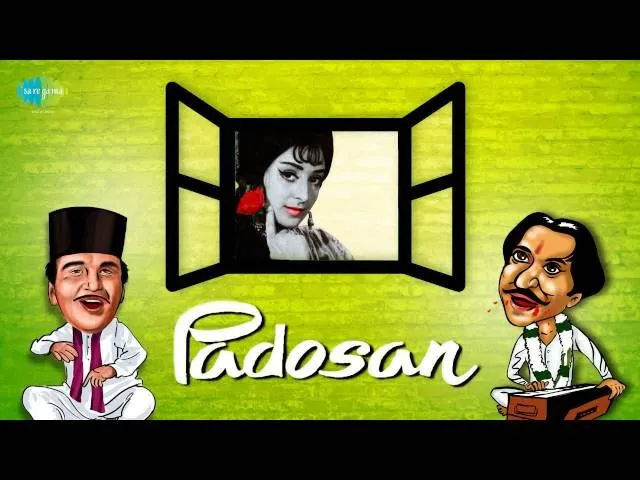
For instance, take the following songs from the Padosan Movie
“Mere Samne Wali Khidki Mein”
This song became the anthem of innocent one-sided love. The lyrics are simple, conversational, and deeply visual. ‘Mere samnewali khidki me ek chand ke tukda rehta hai afsoos ye hai ke wo humse ukhda ukhda rehta hai’. It captures the fantasy of admiring someone from afar, something universally relatable across generations. Personally speaking, I have seen many confess through the same and get rejected, making it a string that is common across the generation to take a leap and express. And even if someone gets rejected, it was just a song. Its magic lies in emotional simplicity, yet a high capacity for portraying complex feelings all at once.
“Ek Chatur Naar”
If you listen to this song, I am sure you will be marveled. It is perhaps one of the greatest musical comedy sequences in Indian cinema. This song in the Padosan movie essentially portrays a battle of ego, talent, and performance between Vidyapati and Master Pillai. The classical music meets comic chaos, and the competitive masculinity becomes satire, making it iconic, and adding to the equation the vocal brilliance of Kishore Kumar and Manna Dey, with the physical comedy synchronized to music, it takes the whole song to another level. Interestingly, the song itself originated in the 1941 film Jhoola before being reinvented in Padosan with explosive comedic energy.
The song Ek Chatur Naar has many such remix versions, one of which is on the SAREGAMA channel; there is even a recent movie starring Divya Kosla Kumar and Neil Nitin Mukesh.
“Kehna Hai” and “Meri Pyari Bindu”
These songs showcase emotional vulnerability beneath the comedy. Meri Pyari Bindu cleverly mixes parody, folk influences, and romantic performance, while Kehna Hai captures youthful hesitation in love. The songs remain popular because they are emotionally direct without sounding artificial.
Meri Pyaari Bindu became a catch phrase, easily making way for many remixes, and became a movie title for the 2017 Ayushman Khurana and Parineeti Chopra starer movie.
Padosan Movie: Origin, Relevance, and Reception
It is reported that Padosan was inspired by earlier works. It was adapted from the Bengali story Pasher Bari and the Bengali film adaptation of the same name. So it was not a completely original story. Some critics also trace thematic inspiration back to the French play because of the “hidden voice helping a lover” concept. Yet in this movie, the premise is completely transformed through Indian musical comedy and character-driven storytelling.
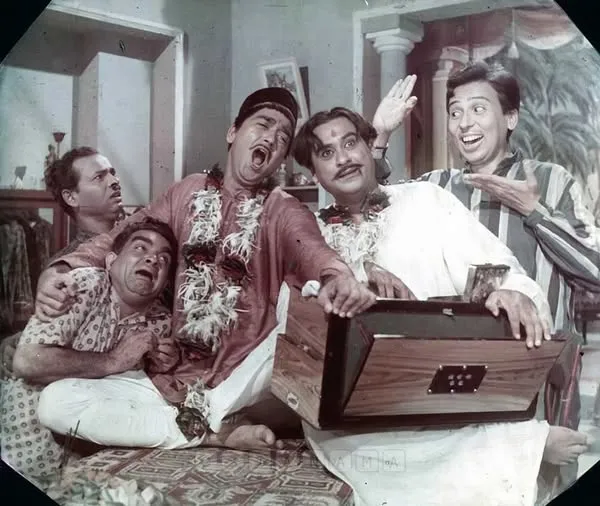
Padosan represents an India that many people emotionally miss: the slow-paced neighborhoods, the open-window conversations, innocent romance, analog friendships, and music as social interaction rather than performance. The Padosan movie creates emotional warmth. Watching it feels like revisiting family memories, old radio songs, and simpler social relationships. That emotional familiarity keeps the movie alive across decades.
At release, Padosan was appreciated as a comedy entertainer, but its deeper cultural legacy grew gradually over time. Unlike some films that dominate the box office and screen throughout or some that start with a bang and immediately fade later, Padosan expanded through repeated television broadcasts, music popularity, and family recommendations. The comical relief, the romantic relevance, the emotional connection, and the dramatic portrayal made it a revisit for many.
Internationally, Indian diaspora audiences embraced it because it captured the warmth and theatricality of classic Bollywood. Today, it holds cult status among lovers of vintage Indian cinema and remains highly rated even decades later.
The Creative Approach and Brand Equity
The film’s long-term success comes from its layered entertainment structure: slapstick comedy, musical storytelling, character-driven humor, theatrical staging, relatable romance, and memorable catchphrases. Every supporting character contributed to the film’s world-building; even side characters felt distinct and alive, nothing was mere decoration, everything and every person had significance.
Over time, this created massive cultural “brand equity.” The film became more than a movie; it became a reference point for Indian comedy itself. Many later Bollywood comedies borrowed from the Padosan movie the concepts like exaggerated rivalry dynamics, musical humor, eccentric friend groups, and innocent male protagonists. Yet very few recreated the emotional innocence of Padosan.
Would Gen Z Enjoy Padosan Movie?
I feel surprisingly, yes. While Gen Z (referred to as the generation born in years 1997-2012) may initially not relate to the context of the movie setting the storyline may hit a spot for any generation that can indulge them. And even with the slower pace of the movie compared to modern films, the meme-worthy expressions, musical battles, quirky characters, and absurd humor still feel entertaining.
In fact, many sequences now feel unintentionally “internet-friendly.” The film’s theatrical exaggeration resembles modern sketch comedy and reaction humor. And because the emotions are simple and honest, younger audiences can still emotionally connect with it, when you are naive yet do not readily accept and take rash decisions. The shy yet aggressive approach of suitors might be relevant, while opinionated and bold Bindu might hold an appeal to the generation.
Is Padosan a Good Family Watch?
Absolutely. Despite being a chaotic and dramatic amalgamation of art, the Padosan movie remains one of the safest and most wholesome Bollywood comedies for family viewing. Containing clean humor, classic timeless music, minimal violence, emotionally warm storytelling, and a multigenerational appeal to the storyline. It works equally well during family movie nights, nostalgic rewatches with parents, or discovering classic Bollywood with friends.
Final Verdict: The Art Behind Padosan
This movie is considered a masterpiece, an evergreen movie, but the real art of Padosan lies in balance. It balances absurdity with sincerity; music with comedy; and chaos with emotional warmth. The film never tries to appear “important,” yet accidentally becomes culturally important because of how honestly entertaining it is.
The romantic songs by Kishore Kumar became immortal. The characters portrayed by Sunil Dutt, Kishore Kumar, Saira Banu, and Mehmood as actors became archetypes. Its humor survived generations.
And perhaps that is why Padosan still feels magical, not because it was technically perfect, but because it was joyfully human, with raw emotions portrayed. Follow Trendbrewer for more such movie reviews and trending articles.
By P. Manika (Performist Content Writer)