Olivier Rousteing Parts Ways With Balmain After 16 Years — The End of a Defining Era
Olivier Rousteing has left Balmain after 16 years (14 as creative director). Read his full story — early life, rise through fashion, signature Balmain moments, celebrity clients, estimated earnings, and where to find free images for press use.
What This Means for Balmain & What Led Up to the Departure
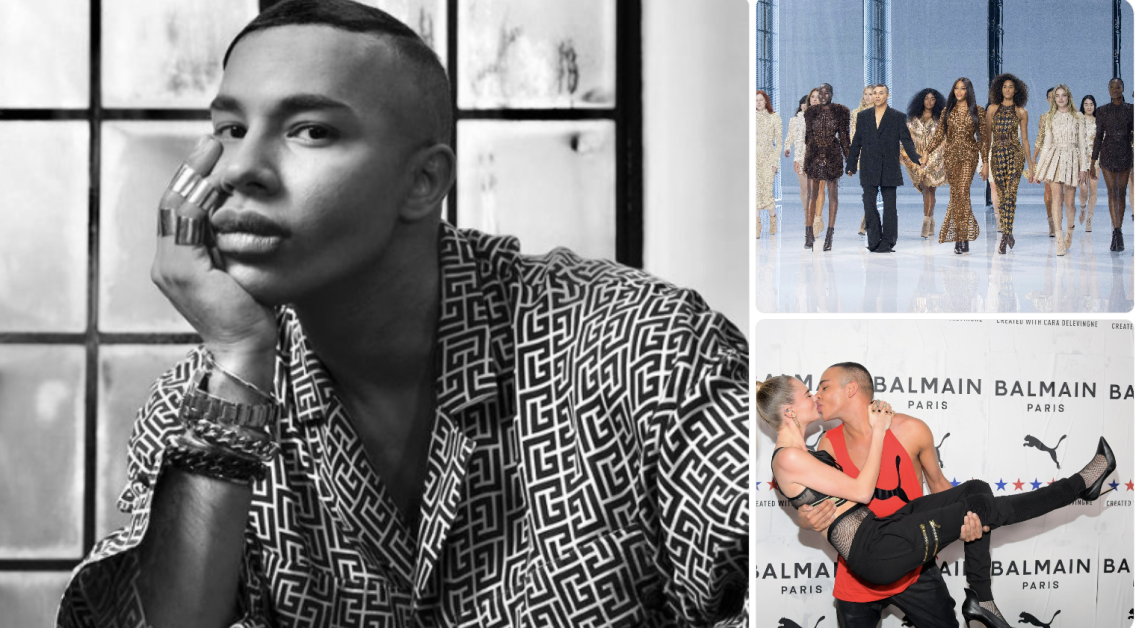
The departure of Olivier Rousteing from Balmain marks a major turning point for the French luxury house — one that signals both the end of a defining era and the beginning of a new strategic chapter. Under Rousteing’s leadership, Balmain evolved from a fairly niche Parisian label into a pop-culture powerhouse, thanks to flash-style spectacle, social-media savvy and celebrity dressing.
For Balmain, the exit means stepping into transition mode: the brand must now rethink its creative identity, maintain relevance in a shifting luxury market, and manage legacy while pursuing fresh vision. Industry observers highlight this as a moment for the house to recalibrate.
What led up to Rousteing’s exit? Several factors:
- After 14 + years as creative director (joined in 2009, CGD from 2011) he reached a natural milestone and publicly acknowledged that his “Balmain era” was closing.
- The luxury fashion environment is under pressure: slowing spending, rising costs, demand for fresh creative voices. Reports suggest Balmain’s owner group is seeking a refresh.
- Moreover, there’s a sense in commentary that the house’s aesthetic was ripe for evolution — having for years leaned heavily into the same bold, high-glamour formula, questions of “what’s next” began to surface.
Together, these elements set the stage: a storied tenure coming to a close, a brand facing both opportunity and challenge, and a designer ready for a next chapter.

Who Olivier Rousteing Is & How He Rose to Prominence
Early life: Born 13 September 1985 in Bordeaux, France, and adopted as an infant. Later learned his biological parents were of Somali and Ethiopian origin — a revelation that he has said shaped his sense of identity and creative mission.
Education & early career: He studied at ESMOD and joined fashion, working at Roberto Cavalli before being invited to join Balmain in 2009.
At Balmain: In 2011 he became creative director at just 25 — among the youngest for a major Paris house, and its first Black designer in that role.
He quickly established a bold signature — muscular tailoring, heavy embellishment, strong shoulders, glamorous celebrity-casting, and a social-media-first attitude to luxury.
What He Has Done During His 14+ Years at Balmain
Commercial transformation: Under his creative leadership, Balmain grew from tens of millions of euros in revenues to significantly higher figures (for example, the house reported revenues around €300 million in recent years).
Celebrity/pop-culture reach: Rousteing built what was dubbed the “Balmain Army” — a network of celebrity muses, influencers, and show-stopping red-carpet moments (including stars like Rihanna, Beyoncé, Kim Kardashian) that amplified the brand’s visibility.
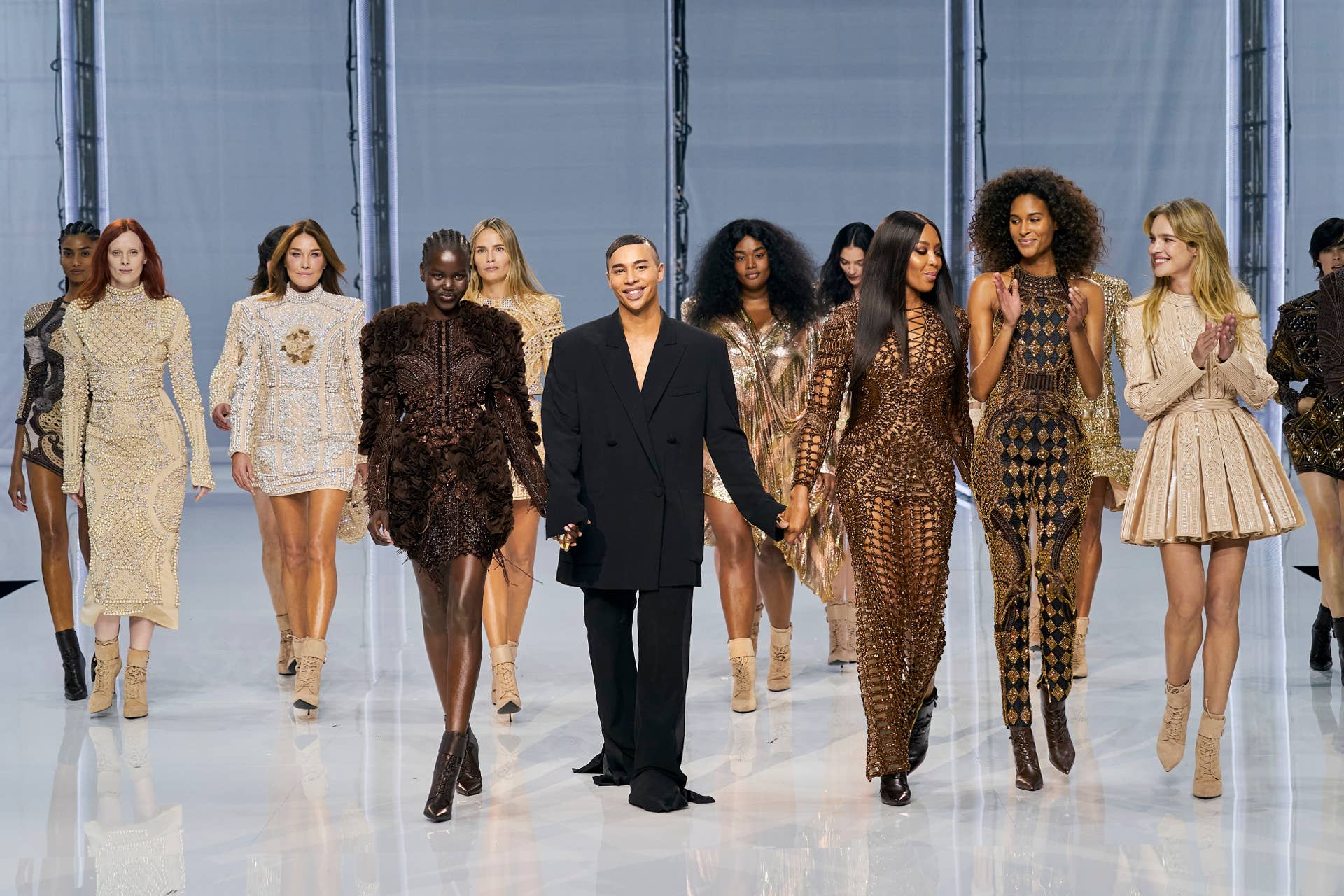
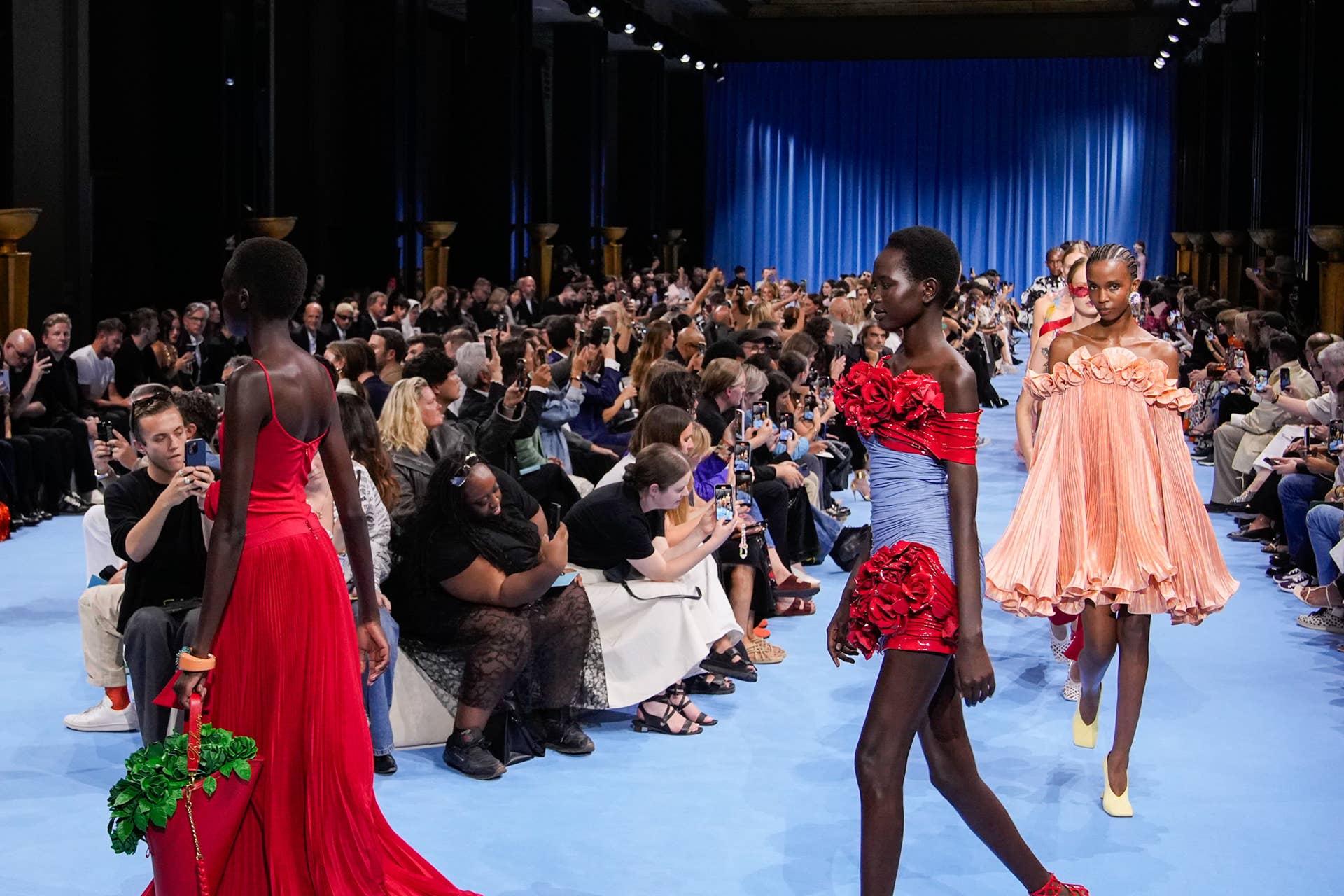
Runway spectacle: Balmain shows under Rousteing frequently felt like cultural events rather than traditional runway presentations — inclusive casting, lavish sets, digital-first campaigns.
Legacy and heritage focus: Later in his tenure he increasingly referenced the archives of the house (founded 1945) and sought to balance the heritage DNA with contemporary energy.
What he did at Balmain for 16 years
Highlights and strategic moves during his tenure:
Commercial growth: Under Rousteing Balmain’s revenue rose sharply (reported growth from tens of millions to several hundreds of millions of euros during his leadership).
Push into pop culture: High-profile celebrity campaigns (Rihanna, Beyoncé, Kim Kardashian, Justin Bieber and many others) and red-carpet looks turned Balmain into a staple of celebrity dressing.
Runway reinvention: Runways that read like music-video moments — heavy tailoring, ornate embellishment, and a maximalist “Balmain girl/army” aesthetic.
Events and diversification: Projects such as the Balmain Festival, expansion into beauty/accessories and reviving couture operations.
Signature shows, celebrity clients and iconic pieces
Rousteing’s Balmain produced some of the decade’s most-talked-about fashion moments:
Rihanna & Kim Kardashian: Early and recurring muses in campaigns and runway moments.
Beyoncé: Frequent collaborator and public supporter; Balmain’s connection to music/performers was central to Rousteing’s strategy.
Tyla’s 2024 Met Gala “sand” dress: A sculptural, sand-covered Balmain gown that required backstage modification and careful handling — widely reported as an example of Rousteing’s theatrical couture.
Naomi Campbell and other supermodels: High-profile runway moments (guest closures and front-row appearances) that reinforced the house’s cachet.
Most appreciated/remembered work (editorial & pop culture highlights)
The Balmain Army (celebrity casting and influencer-forward campaigns) — shifted how luxury engages fans.
Red-carpet armor: heavily embellished, sharply tailored couture that blended glamour and modern spectacle (seen on dozens of celebrities).
Met Gala pieces and couture experiments (including the Tyla sand dress) — showcased Balmain’s technical flair and appetite for theatrical, media-friendly statements.
Salary and net worth — what we know (and what we don’t)
Official figures: Balmain (and most luxury houses) do not publicly disclose individual creative director salaries or personal net worth. That makes hard numbers speculative.
Estimates: Publicly-available estimates in tabloids and web outlets often place Rousteing’s net worth in a wide range (some outlets cite figures around $50–$100M, while salary estimates for high-profile creative directors vary widely). Treat these as unverified estimates only.
Contextual note: Creative director compensation typically includes base pay, bonuses tied to performance, and additional income from partnerships/endorsements; Rousteing’s visibility and partnerships likely increased his earning opportunities, but exact numbers remain private.

What this departure means for Balmain and Rousteing
For Balmain: Leadership change opens the house to a new creative direction; ownership (Mayhoola) signaled a desire to refresh the brand’s next chapter. Revenue growth under Rousteing leaves the maison commercially stronger, giving the house room to pivot.
For Rousteing: He leaves with a strengthened public profile, a loyal following, and portfolio projects (documentaries, partnerships and past-year awards) that position him for future creative or commercial ventures. He hinted at “beautiful adventures ahead” but did not specify the next move.
Summary
Olivier Rousteing’s departure from Balmain doesn’t just mark the exit of a designer — it’s the conclusion of a creative chapter that reshaped how luxury interacts with celebrity, social media and global culture. For Balmain, the task ahead is to harness that legacy while forging a new creative direction. For Rousteing, the next move remains open — and the fashion world will be watching
By [Tommy Thounaojam] Editor Trendbrewers