
Is the Fitbit Air Set to Disrupt the Wearables Market? A Comparison with Whoop
With Fitbit launching a potential “Whoop Killer” can they stand their ground against a larger competitor that has already established a large following for a little over a decade now? Read more and find out where they both stand.
The Wearable Wars: Whoop vs Fitbit Air
Smart watches and trackers have been around for a really long time now and they are some of the most popular wearable brands. From the garmin and apple watch to the budget friendly Xiaomi smart bands, there is a sports tracker for every price range. They are a versatile and easily accessible way of accurately tracking your health and overall sports performance making it a safe choice for the most.
But as competition intensifies, brands are racing to offer deeper health insights while making their devices more accessible to everyday users.
For years, Whoop has occupied a unique position in the market. Favoured by professional athletes and fitness enthusiasts, the device built its reputation on recovery-focused analytics and a subscription-based model that prioritises performance data over traditional smartwatch features. Its emphasis on strain, sleep, and recovery has helped establish it as one of the leading names in wearable fitness technology.
Now, Fitbit Air enters the conversation as a potential disruptor. Backed by Fitbit's established presence in the health-tech space, the device aims to deliver many of the features consumers have come to expect from premium fitness trackers while appealing to a broader audience. With a more familiar ecosystem and potentially lower barrier to entry, Fitbit Air could challenge Whoop's dominance among users seeking advanced health insights without committing to a specialist platform.
The question here is whether switching from Whoop to Fitbit really makes sense since you won’t have to pay a hefty subscription upwards of 30K INR, while still getting all the basic features.

Feature Face-Off: Tracking, Recovery, and Performance
At their core both Whoop and Fitbit are designed to help users better understand their health and fitness, but they approach that goal in very different ways. While both devices track key metrics such as heart rate, sleep, activity levels, and overall wellness, the way they present and utilise that data sets them apart.
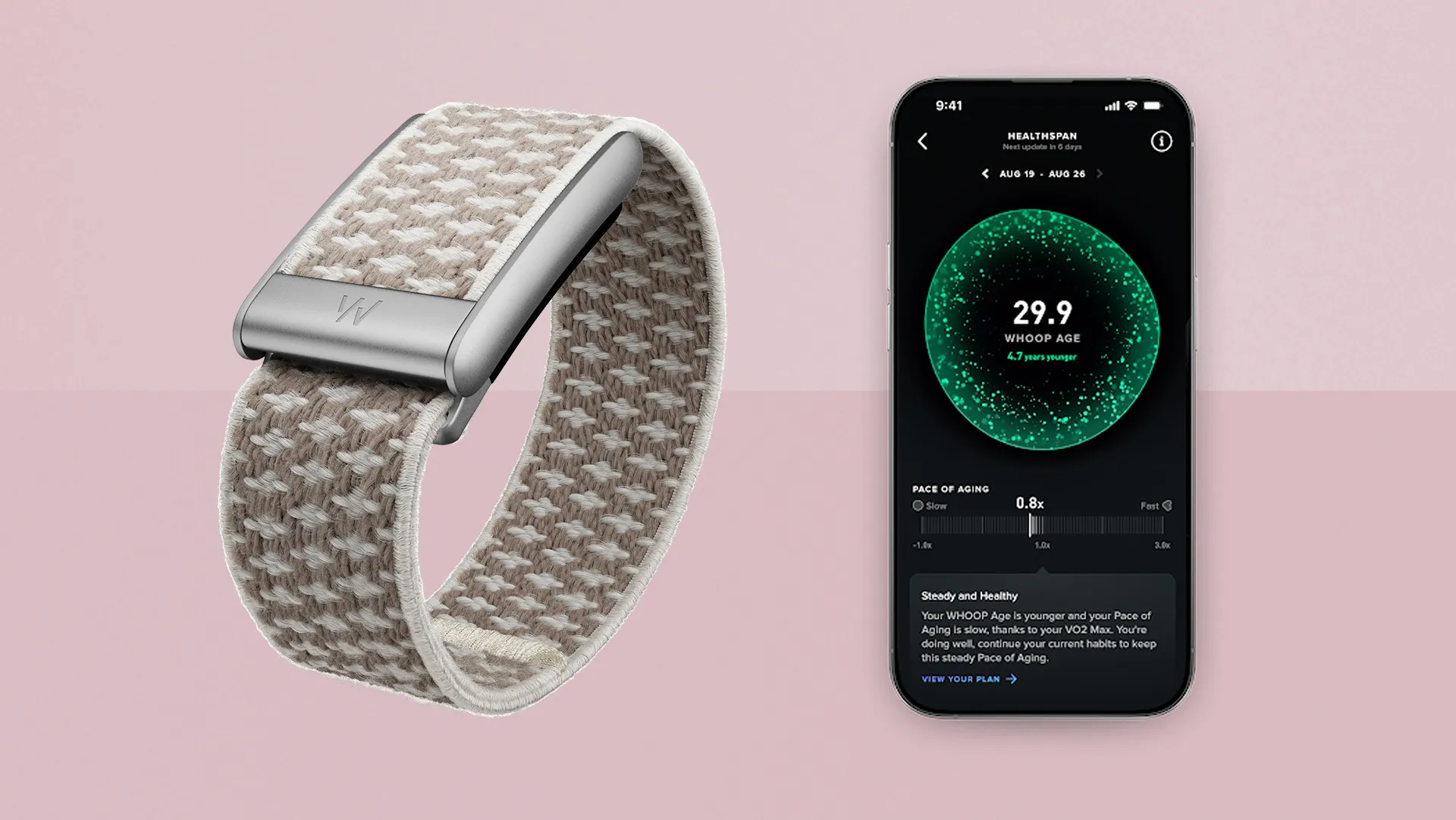
Whoop has built its identity around performance optimization. Rather than focusing on steps or workout counts, it emphasises metrics such as strain, recovery, and heart rate variability (HRV). By analysing how the body responds to training, sleep, and daily stress, Whoop provides personalised recommendations on when users should push harder and when they should prioritise recovery. This recovery-first philosophy has made it particularly popular among athletes and serious fitness enthusiasts.
Fitbit Air, on the other hand, takes a broader approach. Alongside traditional activity tracking, it offers health-focused insights designed for both casual users and fitness-conscious consumers. Sleep monitoring, heart rate tracking, readiness scores, and wellness metrics are presented in a more accessible format, making it easier for users to understand their overall health without needing to interpret complex performance data.
When it comes to recovery tracking, Whoop remains one of the most specialised devices on the market. Its detailed analysis of sleep quality, recovery scores, and physiological readiness provides a level of depth that few competitors can match. Fitbit Air aims to offer similar insights but packages them within a more familiar ecosystem, balancing advanced health tracking with everyday usability.
Ultimately, it boils down to one’s priorities and ways of how the tracker is used. Users seeking highly detailed performance and recovery analytics may still gravitate towards Whoop, while those looking for a more rounded health and fitness companion could find Fitbit Air's approach more appealing. The result is a contest between specialisation and accessibility, with both devices targeting slightly different interpretations of what a modern fitness wearable should be.
Design, Comfort, and Everyday Use: Form over Functionality
A fitness wearable can offer the most advanced health data and analysis at the flick of your wrist, but if it is uncomfortable to wear, many users will eventually leave it on a bedside table. As a result, design and everyday usability are just as important as the data being collected.
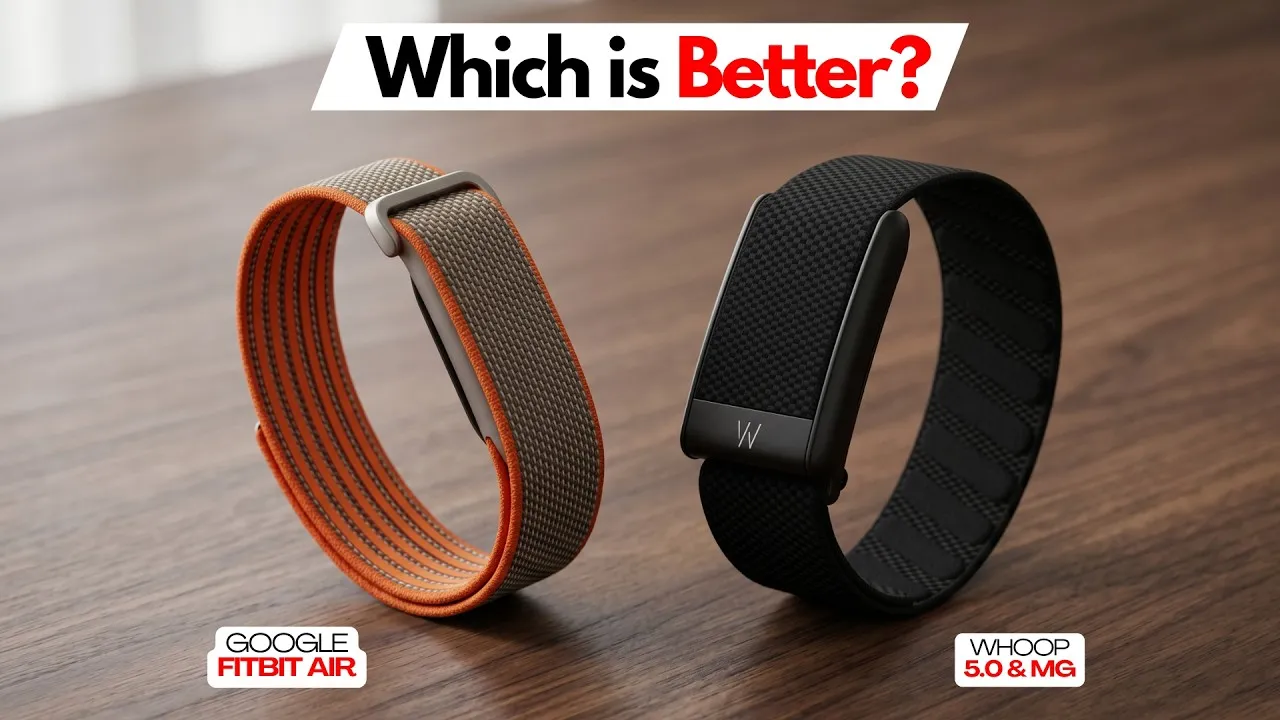
Whoop takes a minimalist approach. Unlike traditional smartwatches or fitness bands, it features no screen, buttons, or notifications. This allows the device to remain lightweight and discreet while maintaining a strong focus on continuous health monitoring. The absence of a display also helps reduce distractions, encouraging users to concentrate on long-term trends rather than constantly checking statistics throughout the day. For athletes and dedicated fitness enthusiasts, this streamlined design has become one of Whoop's defining characteristics.
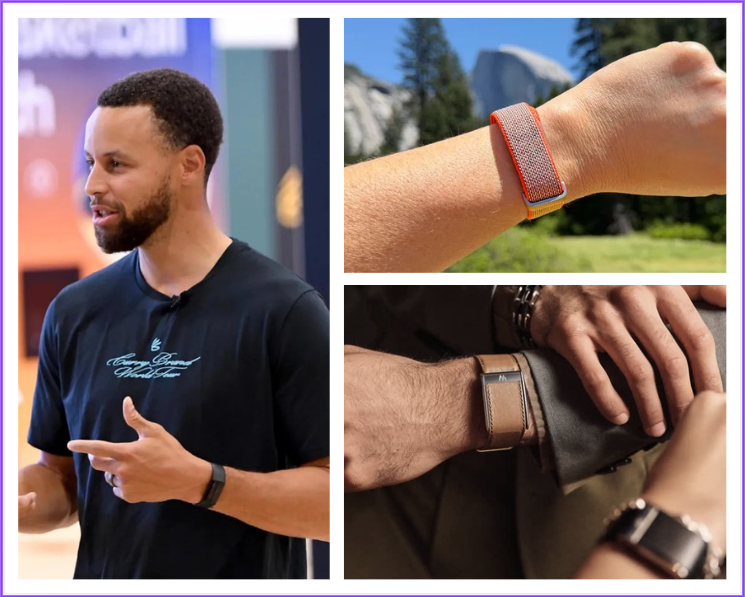
Fitbit Air follows a more conventional wearable philosophy. Designed to fit naturally into everyday life, it combines health-tracking capabilities with a user-friendly interface that allows users to quickly access key information. This makes it particularly appealing to consumers who want actionable health data without relying entirely on a companion smartphone app. It also allows users to switch between various band textures for regular use and for workouts. The default strap comes in a rugged “Stephen Curry” edition along with various silicone textures.
Comfort is another key battleground. Both devices are built for around-the-clock wear, including during workouts and sleep. Lightweight materials, adjustable bands, and water-resistant designs ensure that users can keep the devices on throughout the day without significant discomfort. However, individual preference often plays a major role. Some users may appreciate Whoop's barely noticeable design, while others may prefer Fitbit Air's more familiar form factor and on-device functionality.
In everyday use, the distinction becomes even clearer. Whoop is designed as a dedicated performance-tracking tool, constantly collecting data in the background and delivering detailed insights through its app. Fitbit Air aims to balance health monitoring with convenience, offering a more accessible experience for users who want fitness tracking to complement their daily routine rather than define it.
Ultimately, the choice comes down to lifestyle. Those seeking a purpose-built performance tracker may favour Whoop's minimalist approach, while users looking for a versatile wearable that blends seamlessly into everyday life may find the Fitbit Air to be the more practical option.

Price, Subscription, and Value: Do regular consumers really need a subscription?
For many consumers, the biggest factor that plays into their decision making process when choosing a fitness wearable is not the features it offers but the cost of accessing them. In an increasingly competitive market, companies are not only competing on hardware but also on the long-term value they provide through software, subscriptions, and ecosystem support.
Whoop has long stood apart from its rivals with its subscription-first model. Rather than simply purchasing a device, users typically pay an ongoing membership fee that unlocks access to the platform's recovery insights, performance analytics, and personalized recommendations. While this approach allows Whoop to continually improve its software and add new features, it also represents a significant long-term investment. For dedicated athletes who rely on the platform's advanced data, the cost may be justified, but casual users may find the recurring expense difficult to overlook.
Fitbit Air takes a more familiar route. Users gain access to core tracking features through the device itself, while additional insights may be available through optional premium services. This lower barrier to entry makes the platform more accessible to consumers who want meaningful health data without committing to a long-term subscription. The result is a product that appeals to a broader audience, particularly those entering the wearable market for the first time.
Value ultimately depends on what users expect from their device. For serious athletes, coaches, and performance-focused individuals, Whoop's detailed recovery metrics and training insights may provide enough benefit to justify the ongoing cost. However, for everyday users interested in tracking their health, activity, and sleep habits, the Fitbit Air could offer a more balanced combination of features and affordability.
The comparison highlights a growing divide within the wearable industry. One side prioritises specialised performance analytics through a premium subscription model, while the other focuses on delivering accessible health tracking to a wider audience. The winner, therefore, is likely to be determined not by price alone, but by how much value each user places on the insights they receive.
Verdict: Could the Fitbit Air potentially topple the world of Whoop?
Calling the Fitbit Air a “Giant Killer” may be premature, but it is certainly one of the most credible challenges to Whoop's position in the fitness wearable market. Rather than attempting to replicate every aspect of Whoop's performance-focused ecosystem, Fitbit Air appears to be targeting a broader audience by combining advanced health tracking with greater accessibility and ease of use.
Whoop continues to hold a significant advantage when it comes to recovery analytics, training insights, and athlete-focused performance monitoring. Its reputation among professional athletes and fitness enthusiasts has been built over years of refining a platform designed specifically for those seeking to optimise every aspect of their physical performance.
However, Fitbit Air's strength lies in its versatility. By offering many of the health and wellness features consumers increasingly expect, while potentially avoiding the commitment of a subscription-heavy model, it presents an attractive alternative for users who want meaningful insights without becoming deeply invested in a specialised performance platform.
The real significance of Fitbit Air may not be whether it overtakes Whoop, but whether it forces the industry leader to evolve. Increased competition often drives innovation, lowers barriers to entry, and gives consumers more choice. In that sense, Fitbit Air has already succeeded in shaking up a market that has largely belonged to a handful of dominant players.
So, is Fitbit Air a giant killer? Not quite. But it has the potential to become a genuine disruptor, narrowing the gap between elite performance tracking and mainstream fitness technology. For consumers, that can only be a good thing.
If you enjoyed reading this piece, we're sure you will enjoy more lifestyle pieces like this one on headphones!
By Siddhant Kohli