Flaunting Culture, Heritage & Mango!? Isha Ambani at The Met Gala 2026
When it comes to slaying fashion, on the Red Carpet, nothing can beat the Met Gala, and with her unique Mango and gajra in hand, Isha Ambani created a buzz. Let's decode her outfit.
Met Gala is always the talk of the town when it commences, and with celebrities sporting bold and experimental styles, some going all out while some recreating a vintage classic look back with a contemporary touch. And when it comes to Met Gala outfits, many have different opinions; some might appreciate the detailing and how it is elaborated, while others would oppose the extravaganza.
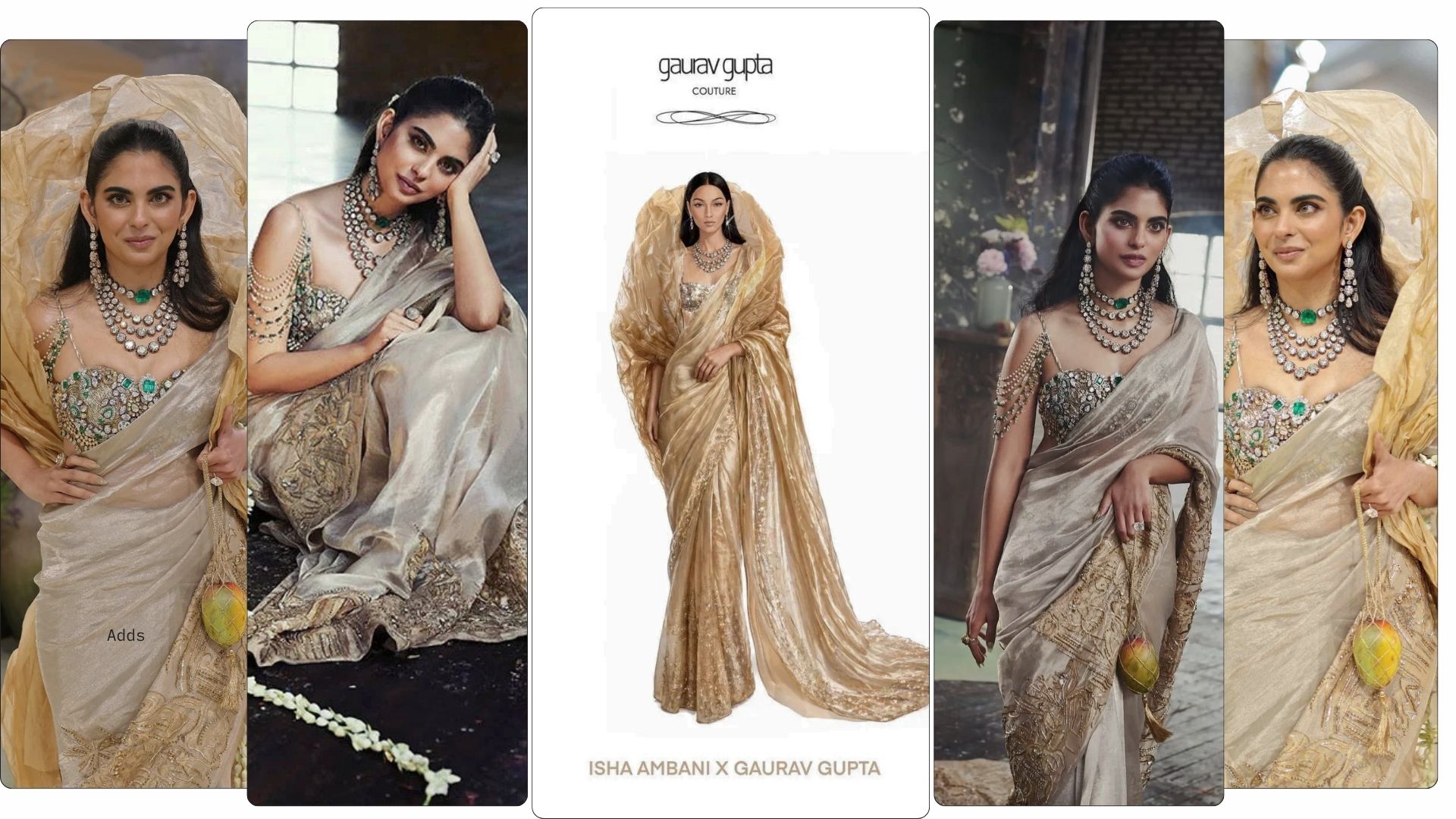
Well, today we are going to talk about the surprising and appalling Mango entry of Isha Ambani at the Met Gala 2026. With Emerald and gold in her style, adorning a saree, she carried around a Mango in her bag. What is that all about? While it’s not the first time fascinating people with her extravagant look at the Met Gala, this year seems a little different. Let's take a deeper dive into her look and details in her styling, and the secret behind carrying the Mango.
Mango At Met Gala!! But The Saree Slayed The Met Gala 2026
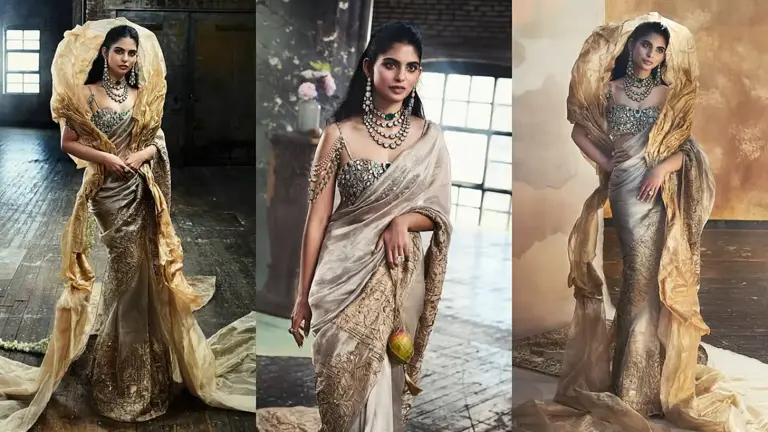
While Mango at the Met Gala Red Carpet 2026 made a buzz as Isha Ambani stepped onto the red carpet, the real story lay in the saree she draped in molten gold, layered with jewels, and centuries of Indian textile history. Isha Ambani’s look was far more than couture. It was heritage worn as art a regional clothing representing the beat of Indian women.

The Architect Behind Isha Ambani's Met Gala Look
The custom saree Isha Ambani wore at the Met Gala 2026 has become the talk of the town. It was designed by an acclaimed Indian couturier, known globally for merging sculpture with couture, Gaurav Gupta.
Unlike conventional fashion designers who focus only on silhouettes, Gupta approaches garments almost like architecture. His work often explores fluidity, mythology, cosmic structures, and the transformation of fabric into wearable art. For the Met Gala’s “Fashion Is Art” theme, Gupta did not want the saree to look like merely “traditional clothing.” Instead, the concept was to make the garment itself feel like a living historical sculpture. Reportedly, according to details shared from the couture house, the look was envisioned as a “study of the dressed body, where art is not applied, but lived.”
This philosophy explains why the outfit did not rely on a simple glamorous drape. The saree flowed into a sculptural resin cape, transforming the silhouette into something almost museum-like.
Why the Gold and Emerald Combination Was So Powerful
The gold-and-emerald pairing was not random luxury styling. In Indian royal history, gold and emeralds symbolized prosperity, fertility, divine energy, and regal authority. According to Egyptian beliefs, Indian Royalty all favoured green emerald moulded in Kundan jewellery as a symbol of prosperity.
The Mughal courts heavily favoured Colombian emeralds paired with gold because green represented life, renewal, and paradise in Persian aesthetics. Gold, meanwhile, has always represented permanence and sacredness in Indian culture. Over centuries, Indian royal jewelry evolved around this exact combination. Even sarees woven with gold tissue work were traditionally reserved for royalty, temple rituals, weddings, and ceremonial occasions.
So this combination of molten gold drapes with deep emerald stones, echoed Mughal royal jewelry traditions, Temple art aesthetics, Vintage Indian bridal heirlooms, and the richness of old Indian courts, dramatically under the Met Gala lighting, ensuring global visual impact.
The Jewelry & Blouse: Fashion Meets Heirloom History
One of the most fascinating aspects of the outfit was the blouse itself. Isha Ambani didn’t just wear jewelry over the garment; she even had the heirloom stones integrated directly into the blouse structure. The blouse featured Diamonds, Emeralds, Polki stones, Kundan craftsmanship, and Mine-cut heritage jewels. If you remember her, look at Anant Ambani’s and Radhika Merchant's pre-wedding, where she had the same art integrated.
Many of the stones reportedly came from her private collection and family heirlooms. This blurred the line between fashion and inheritance. The garment itself became jewelry. The styling included historic references to old Indian royal ornamentation. The back of Isha Ambani’s Met Gala Saree included a sarpech, a crown jewel also called a kalgi from Hyderabad’s Nizami legacy. It reportedly is one of Nita Ambani’s private collections, which was gifted to her daughter long ago.
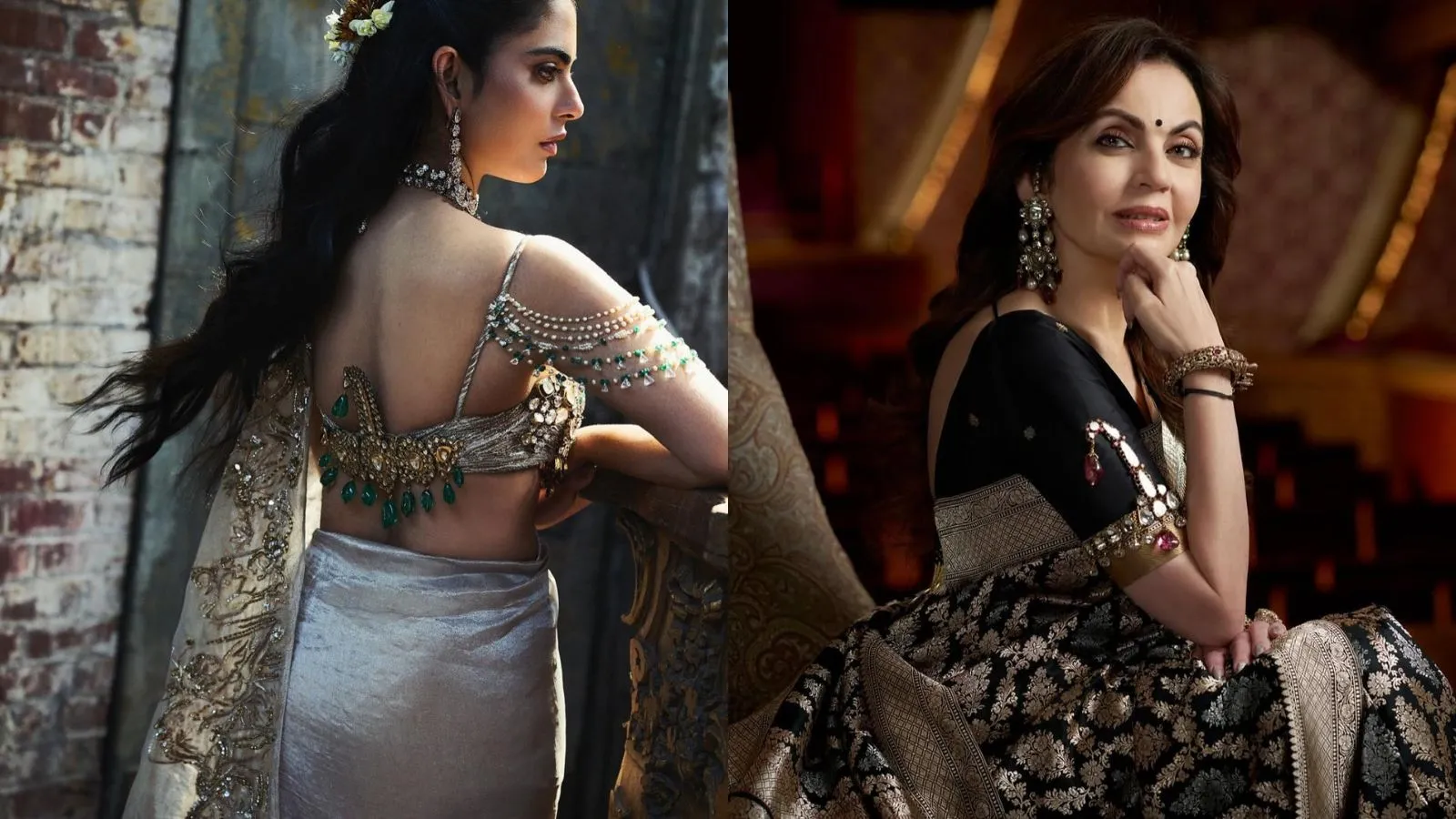
This takes me back to the time when Nita Ambani flaunted another such historic Sarpech or Kalgi as her Bajuband (arm band jewelry) during the Miss World Finals held at Jio World Convention Center in Mumbai. You just trust her to have the best jewellery collection, be it for the wedding or flaunting among high society gatherings and award functions.
And it's not just her blouse, etched with royal jewels; her 3-layered necklace, going surprisingly well with the sparkling blouse, had a 50-carat Colombian Emerald.
The Embroidery: A Moving Archive of Indian Craftsmanship
Many may say that with a heavy blouse, the saree should be simple, but it's Isha Ambani at the Met Gala, and she should make a statement. May may disagree, but the golden embroidery is golden on the same colour saree, moulding beautifully, not contrasting and on closer look, decoding the deep meaning behind it. The saree was not simply embroidered; it was historically layered, intellectually fascinating to the fashion historians.

Reportedly, the borders of her saree featured hand-painted motifs inspired by the Ajanta frescoes, among the earliest visual depictions of draped garments in Indian art history. The embroidery incorporated gold thread weaving, Zardozi-inspired detailing, Kundan embellishment, hand-painted textile art, and a Fresco-inspired border work. Rather than using embroidery for mere decoration, the artisans embedded references to ancient Indian artistic traditions into the textile itself, crafting a story with threads.
Artisans Who Worked on Isha Ambani’s Met Gala Saree Outfit
It's obvious that if the work is that detailed, the craftsmanship behind it would be massive. According to fashion reports and atelier disclosures, over 50 artisans contributed to the ensemble, which required more than 1,200 hours of work. To break it down
- Specialized gemstone setting artisans were involved in the blouse crafting
- Textile artists worked separately on painted fresco-inspired motifs
- Indian embroidery craftsmen handled the gold-thread detailing by hand
- And it was all with the vision of the designer who assembled this outfit
This level of labour reflects the reality of Indian couture craftsmanship, where fashion is often created collectively rather than individually. Behind every dramatic red-carpet moment are unseen karigars whose handwork preserves centuries-old techniques.
Isha Ambani’s Mango Bag And Gajra Prop At Met Gala 2026
Of course, no discussion about the look is complete without the mango and the dangling Gajra in her hand.
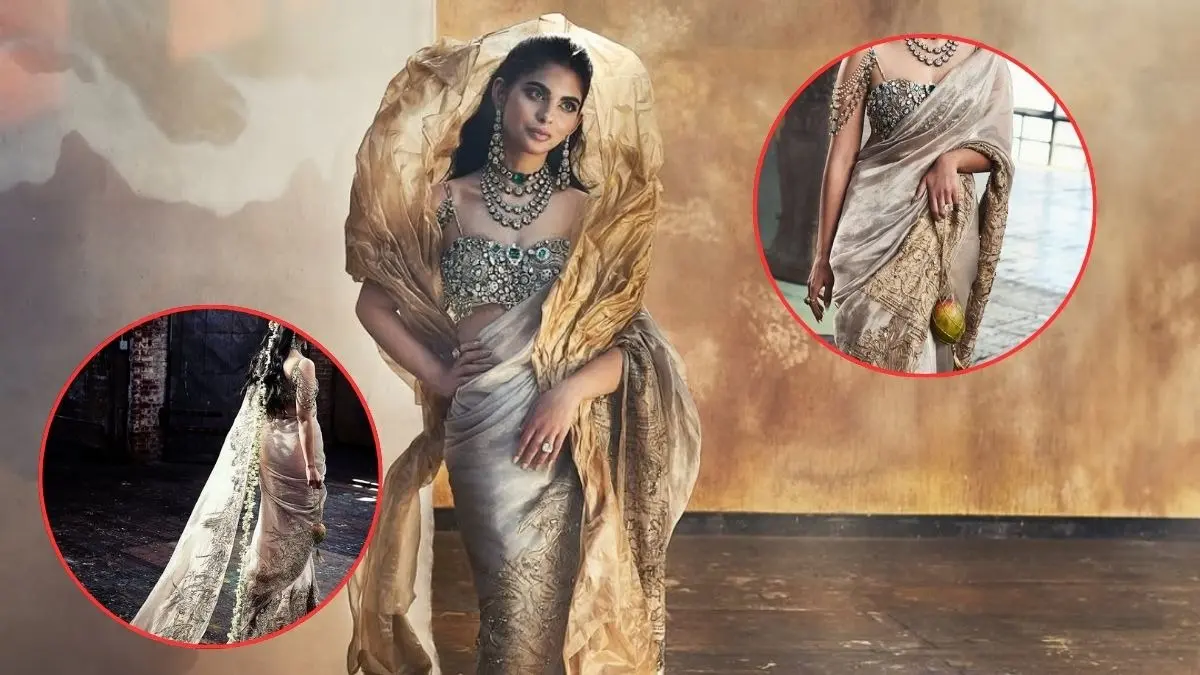
What appeared to be a real mango was actually a steel sculpture by a renowned Indian contemporary artist, Subodh Gupta. The artwork was reportedly around 20 years old. It symbolized abundance and sweetness. Mango motifs appear in Indian textiles and temple art. It evokes nostalgia, summer, royalty, and childhood simultaneously. By carrying a mango to the Met Gala, Isha Ambani transformed something deeply local into global high fashion.
And the Gajra was another sculpture reproduced through 150 hours of investment by Saurabh Gupta, reimagining traditional mogra gajra. This is often worn at weddings by brides and groom, also offered during prayer, symbolizing divine blessing, purity and feminine energy. It became a conversation between luxury and memory.
Frequently Asked Questions:
1. What is the Met Gala all about?
Ans) The Met Gala is a glamorous annual fundraising event held at the Metropolitan Museum of Art. Celebrities wear extravagant outfits based on a yearly theme, blending fashion, art, and culture. Organized with support from Anna Wintour, it raises funds for the Costume Institute.
2. Who wore the best dress at the Met Gala 2026?
Ans) Choosing just one “best dressed” at the Met Gala 2026 is honestly tough because many celebrities absolutely sparkled on the red carpet. Some of the most praised looks were Beyoncé, Rihanna, Nicole Kidman, Anok Yai, Emma Chamberlain, Sabrina Carpenter, Kendall Jenner, Lisa, Tyla, and Isha Ambani. Their outfits stood out for creativity, elegance, and how beautifully they matched the “Fashion Is Art” theme.
3. What’s the most expensive Met Gala Outfit?
Ans) The most expensive outfit ever worn at the Met Gala is widely believed to be the iconic Marilyn Monroe “Happy Birthday, Mr. President” dress worn by Kim Kardashian at the 2022 Met Gala. The crystal-studded gown was valued at around $4.8–5 million. In terms of jewelry, Isha Ambani reportedly wore a Cartier necklace worth nearly $100 million at the 2025 Met Gala, making it one of the costliest jewelry pieces ever showcased there. And the Met Gala 2026 outfit adorned by Isha Ambani is speculated to be the most costly outfit with several million dollars because of the extraordinary jewelry and craftsmanship involved.
Concluding Covers
With bold and experimental styling, the Met Gala outfit has always been in talks, while some appraise and some criticize. But this year, with mango and jasmine gajra in hand, draped in golden and emerald heritage, Isha Ambani at the Met Gala 2026 created cultural chatter.
What made this appearance memorable was not only wealth or styling. It was the cultural confidence.
Rather than adapting completely to Western red-carpet aesthetics, the look centred on Indian drapery, Indian textiles, Indian gemstones, Indian art references, and Indian symbolism, without dilution. This is why the outfit resonated beyond celebrity fashion coverage. It told a story.
She carried India onto one of fashion’s most global stages. It creates discussion, symbolism, memes, admiration, criticism, and cultural recall simultaneously. Some praised the dramatic drape and heritage storytelling. Others found the silhouette overwhelming. But almost everyone agreed on one thing: the look was unforgettable. For more such bits, keep following Trendbrewers.
By P. Manika (Performist Content Writer)